No More Dental Fear: How Sedation Options in Glen Allen Make Your Visit Stress-Free
Do you feel a wave of nervousness just thinking about a dental appointment? You’re not alone. Dental anxiety is extremely common and can stem from a fear of pain, a past bad experience, or even the sounds and smells of a dental office. The good news is that modern dentistry offers a compassionate solution. Sedation dentistry in Glen Allen is helping patients conquer their dental fears so they can get the care they need without stress or panic.
At Dr. Sayyar Dental Care in Glen Allen, our priority is to ensure you’re comfortable from start to finish. This means listening to your concerns, explaining everything in plain language, and using the latest techniques to put you at ease. One of those techniques is sedation dentistry – a safe method to help you relax deeply during treatment. With sedation, even the most anxious patient can experience a gentle, stress-free visit. Say goodbye to sweaty palms and racing heartbeats; with the right sedation option, you can actually look forward to a dental appointment knowing you’ll be calm and cared for every step of the way.
Why Choose Sedation Dentistry for Dental Anxiety?
Dental anxiety can be so intense that it causes people to delay or avoid essential care. Unfortunately, putting off visits often leads to more pain and complex problems later on. Sedation dentistry is an approach designed specifically to break this cycle of fear. It involves using medication to help patients feel relaxed and unafraid during dental procedures. In fact, sedation dentistry is sometimes called “sleep dentistry” – not because you’re fully unconscious, but because you enter a twilight state of deep calm while still awake. The result is that time seems to fly by and you remain comfortable and at ease, even during treatments that would normally cause anxiety.
Why might your Glen Allen dentist recommend sedation? Sedation can be a game-changer if you:
- Have an intense fear of dental treatment or needles, making it hard to even sit in the chair.
- Have a strong gag reflex or very sensitive teeth that make dental work uncomfortable.
- Suffer from claustrophobia or panic in the dental chair, or have trouble controlling movements due to conditions like Parkinson’s or anxiety disorders.
- Need a lot of treatment done and prefer to complete multiple procedures in one visit. Sedation helps you tolerate a longer appointment, and your dentist can often work more quickly when you’re fully relaxed.
By addressing these issues, sedation dentistry allows you to receive the care you deserve without distress. Instead of dreading the dentist, you can feel reassured knowing there’s a sedation option to keep you calm. It’s a compassionate tool that has helped countless patients in Glen Allen overcome their dental anxiety and maintain a healthy smile.
How Does Sedation Dentistry Work?
Sedation dentistry uses special medications to create a state of relaxation. Unlike general anesthesia (where you’re completely unconscious), sedation dentistry keeps you conscious but deeply relaxed – you stay awake, responsive, and free of pain, but often you won’t remember much of the procedure afterward. Here’s how a typical sedation visit works:
- Personalized Consultation: First, your dentist will review your medical history and anxiety level to decide on the right sedation method. You’ll discuss any past experiences and sedation dentistry options that suit your needs (nitrous oxide gas, an oral sedative pill, etc.). This is a great time to ask questions and voice any concerns.
- Preparation Before the Appointment: Depending on the sedation type, you may get instructions such as avoiding food for a few hours beforehand or taking a prescribed medication at a set time. If you’ll be taking an oral sedative or receiving a stronger form of sedation, plan to have a friend or family member drive you to and from the appointment.
- During the Procedure: When you arrive, the dental team makes sure you’re comfortable (with a cozy blanket or calming music, if you like). Then the chosen sedation is administered before any dental work begins. For example, you might breathe nitrous oxide through a small mask over your nose, or swallow a pill that starts making you feel drowsy. As the sedation takes effect, you’ll feel your tension melt away. The dentist will also use local anesthetic (numbing injections) once you’re relaxed, so you won’t feel any pain during the procedure. Throughout the treatment, your vital signs (like breathing and heart rate) are closely monitored to ensure you remain safe and comfortable.
- After the Procedure: When the dental work is finished, the sedation medication is stopped or allowed to wear off. With light sedation like nitrous oxide, you’ll recover within minutes and feel back to normal almost immediately. In fact, nitrous oxide’s effects fade so fast that patients can usually drive themselves home afterward. For oral or IV sedation, you’ll be groggy and will continue to relax in our recovery area until you’re ready to go home with your companion. These deeper forms take a few hours to fully wear off, so you’ll be advised to take it easy the rest of the day.
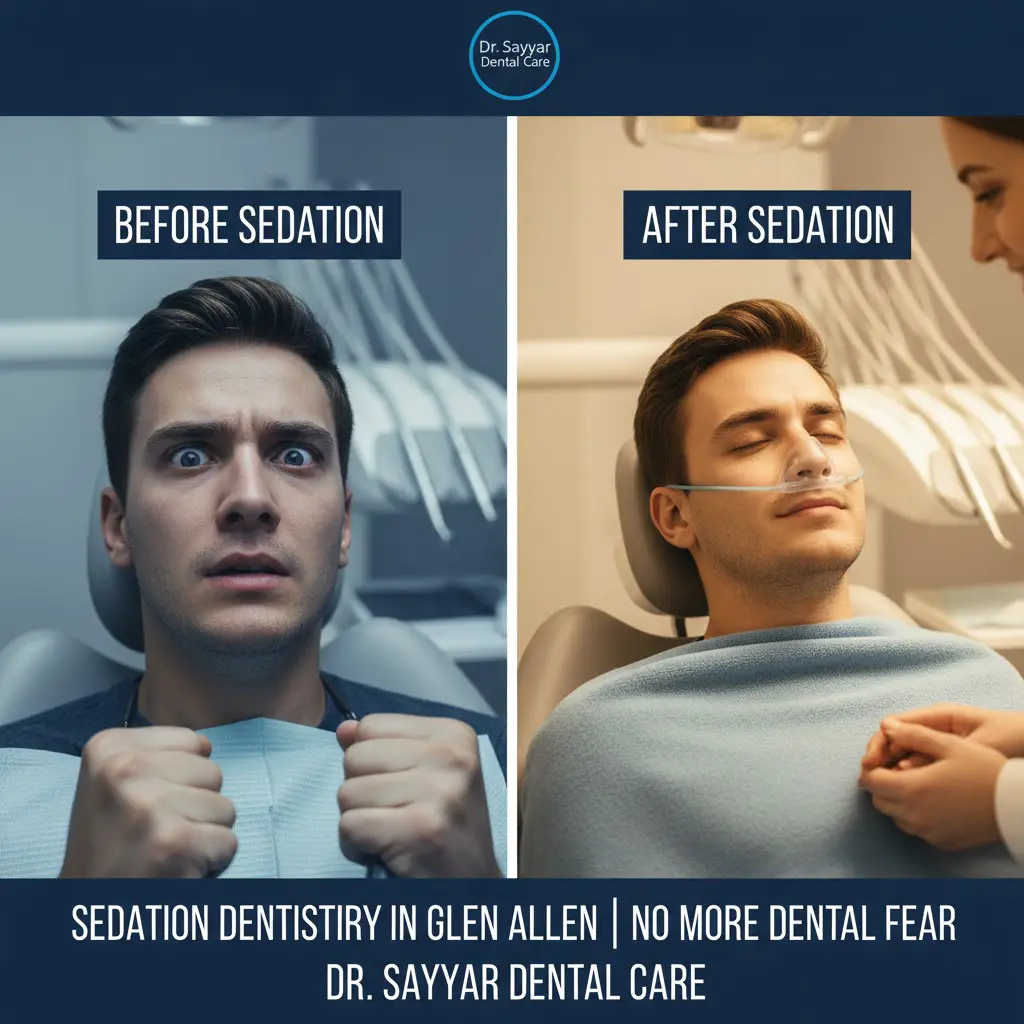
Throughout the process, the goal is to keep you comfortable, pain-free, and anxiety-free. Sedation dentistry truly feels like taking a nap through your appointment – you might hear sounds in the background and respond to gentle prompts (like “open wider”), but you won’t be bothered by the dental work. Many patients say their procedure felt like it lasted only minutes when in reality it may have been a couple of hours. By the time you “wake up” or become fully alert, your treatment is done – no tears, no trauma, no white-knuckling the chair.
Comparing Sedation Options in Dentistry (Table)
Not all sedation is one-size-fits-all. Dentists offer different levels of sedation depending on your anxiety and the type of procedure. Here’s a quick comparison of common sedation dentistry options in Glen Allen:
| Sedation Method | How It’s Given | Level of Relaxation | Key Features |
| Nitrous Oxide (“Laughing Gas”) | Inhaled through a soft nose mask during your visit. | Mild Relaxation (Anxiolysis) | Feel the calming effect within minutes. You stay fully awake but much less anxious. Wears off quickly with oxygen – you can usually drive home after. |
| Oral Conscious Sedation | A prescribed pill (such as Halcion®) taken about an hour before your appointment. | Moderate Relaxation (Conscious Sedation) | You become very drowsy – some patients even doze off. You’re still responsive to questions, but carefree. Needs an escort: no driving until the next day. Effects last a few hours after the visit. |
| IV Sedation (Twilight Sleep) | Medications delivered through a vein by a trained professional. | Deep Relaxation (Conscious Sedation) | Reaches a deeper sedation level quickly. You won’t be aware of the procedure and likely won’t remember it. Needs an escort: recovery is longer (rest for the day). Ideal for high anxiety or lengthy, complex procedures. |
Which sedation is right for you? That depends on your personal anxiety level, medical history, and the treatment being done. For mild dental anxiety, something simple like nitrous oxide might be enough to take the edge off. If you have severe phobia or need an invasive procedure (like wisdom teeth removal or multiple extractions), a stronger method like oral or IV sedation could be recommended. Your Glen Allen dentist will help you choose the safest option that will keep you comfortable without over-sedating you. The aim is always to use the minimal effective sedation – just enough to make you relaxed, but not more than necessary.
Is Sedation Dentistry Right for You?
You might be wondering if you’re a candidate for sedation dentistry. The short answer is: if dental visits make you anxious or you’ve been avoiding care because of fear, sedation is worth considering. Sedation dentistry is especially helpful for:
- Dental Phobia: If you’ve been postponing treatment due to fear, sedation can give you the confidence to proceed. Even those with extreme phobias often find they can tolerate treatment once sedated.
- Sensitive Gag Reflex or Low Pain Tolerance: Some people gag easily during X-rays or procedures, or have difficulty getting numb with normal anesthetic. Sedation relaxes your reflexes and nerves, making the whole experience smoother.
- Lengthy Procedures: Need a root canal, multiple fillings, or an oral surgery? Sedation allows you to sit through a longer session comfortably, so the dentist can accomplish more in one go. This can save you multiple trips and get you out of pain faster.
- Special Needs or Anxiety Disorders: Patients with certain conditions (like autism, severe anxiety, or movement disorders) that make it hard to sit still can benefit greatly from sedation. It creates a calm state where the dental team can work safely and the patient isn’t distressed.
On the other hand, sedation dentistry might not be necessary for every patient or every visit. If you generally handle cleanings and small treatments fine, you may not need it. Sedation also involves some extra planning (for moderate sedation you need a driver, and there may be a small additional cost). However, for those who truly need it, sedation can be life-changing. It’s about empowering you to get care instead of avoiding it.
Consult with your dentist to see if sedation is right for you. They will evaluate your overall health (including any medications you take) to ensure it’s safe. Most healthy adults and even children can safely have some form of sedation for dental work. If you have certain medical conditions or are pregnant, your dentist will discuss alternatives or whether to delay elective treatment. The bottom line: there’s no need to white-knuckle through a dental visit or live with untreated dental issues because of fear. Sedation dentistry in Glen Allen offers a path to comfortable treatments for everyone (from routine gum care to complex procedures) in a safe, controlled manner.
Safety and Aftercare Tips for Sedation
One of the biggest questions anxious patients have is, “Is sedation dentistry safe?” The answer is yes – extremely safe when performed by a qualified professional. Dentists who offer sedation undergo special training and follow strict guidelines to protect patients. In fact, the American Dental Association (ADA) fully supports sedation as part of care, as long as it’s used by appropriately trained dentists and with proper monitoring. During sedation, your dentist and their team will monitor your breathing, heart rate, and blood pressure continuously. Modern sedation medications are very predictable and can be adjusted as needed throughout the procedure. You’re never truly “knocked out” like general anesthesia, which carries higher risks; with conscious sedation, you retain your protective reflexes (like breathing on your own) while simply feeling unworried and numb to discomfort.
That said, there are a few safety and aftercare guidelines to keep in mind once you choose to undergo sedation. Here’s a handy checklist to ensure your visit goes smoothly and you recover comfortably:
- Follow Pre-Op Instructions: Your dentist will give you specific instructions before your appointment. This may include avoiding food or drink for a certain period (especially if oral or IV sedation is planned) and not taking certain medications. Following these instructions is important for your safety during sedation.
- Bring a Companion (for Deeper Sedation): If you’ll be taking an oral sedative pill or receiving IV sedation, arrange for a responsible adult to drive you home. You should not drive or operate machinery for 24 hours after these types of sedation. (With nitrous oxide only, you’ll be alert sooner and can drive yourself.)
- Plan to Rest: Don’t schedule anything strenuous after your dental work. Go home and relax for the remainder of the day. Sedative medications can leave you feeling a bit drowsy, and you’ll recover faster by taking it easy. Most side effects, like grogginess or dry mouth, wear off within the day.
- Stay Hydrated and Eat Lightly: Once you’re home, have a glass of water and a small snack if you’re hungry (unless your dentist gave other dietary instructions). Avoid heavy or greasy meals until you feel fully normal.
- Oral Hygiene Caution: You can resume brushing and flossing gently later the same day, but be careful not to bite your tongue or cheek while you’re still numb. If you had any dental surgery, follow the specific post-op instructions given for those procedures.
- Listen to Your Body: It’s normal to feel a little tired for the rest of the day. But you should steadily regain alertness. If you still feel very groggy or unwell the next morning, call your dentist for advice. They may want to check in with you to be safe.
- Ask Questions & Communicate: Before you leave the office, make sure you understand any at-home instructions. Don’t hesitate to ask about sedation options or any aspect of your care that concerns you (we’re just a phone call away!). The team is there to support you even after you’ve left the chair.
By following these guidelines, you’ll set yourself up for a smooth, worry-free recovery. Remember, the effects of sedation are temporary, but the benefits of getting dental work done with sedation – saving your teeth, eliminating pain, and improving your smile – are long-lasting. Patient safety and comfort are always the top priorities with sedation dentistry.
The Dr. Sayyar Dental Care Advantage
Choosing the right dental office in Glen Allen can make all the difference for an anxious patient. At Dr. Sayyar Dental Care, we pride ourselves on our gentle approach and patient-focused philosophy – especially when it comes to helping those with dental anxiety. Here’s what sets our practice apart:
- A Caring, Experienced Team: Our caring dental team is truly compassionate and non-judgmental, which means you’ll be treated with kindness and understanding from the moment you walk in (meet our team here). We know that dental fear is real, and we take it seriously. Dr. Sayyar himself has over two decades of experience in dentistry and has helped many fearful patients regain their confidence. You’ll never be made to feel embarrassed about your anxiety or the condition of your teeth – we’re just glad you’re here and ready to help.
- Advanced Technology for Comfort: We believe in investing in state-of-the-art technology to improve your experience. From digital imaging and intraoral cameras (which allow for quick, comfortable exams) to CAD/CAM technology for creating crowns or restorations in-house, our clinic uses modern tools that make treatments more precise and comfortable. What does this mean for you? Often, shorter appointments and less discomfort. For example, digital scanners can take impressions without messy trays (great news if you have a bad gag reflex!), and on-site milling means you spend less time in the chair overall. It’s all part of our commitment to comfortable treatments and quality results.
- Personalized Sedation Options: Not every patient needs the same level of sedation, so we tailor our approach. Whether you just need a bit of laughing gas to take the edge off or a stronger sedative for a deep phobia, we’ve got you covered. Our clinic offers a full range of sedation dentistry options to match your needs – and we always ensure you are medically cleared and safe to proceed. We take the time to explain each option, so you feel in control of your care. With us, sedation is never “one-size-fits-all”; it’s about what makes you most comfortable.
- Comfort Amenities & Soothing Atmosphere: Little things can make a big difference in easing anxiety. We’ve created a calm, welcoming office environment. From cozy blankets and neck pillows to your choice of music or TV show during treatment, we try to make you feel at home. Our operatory rooms are designed to be private and relaxing. Every staff member—from the front desk to the assistants—focuses on gentle, patient-centered care. We’ll check in with you frequently during your visit, offering breaks if you need them. The entire experience is built around your
- Trusted and Accredited: Shahreyar “Sean” Sayyar, DDS, MAGD, leads our team. MAGD means Master of the Academy of General Dentistry, a distinction earned by dentists who have completed extensive continuing education (so you know you’re in skilled hands). Our practice follows all ADA and Virginia state guidelines for sedation and patient safety. We stay updated on the latest techniques and protocols. Ultimately, our goal is to combine top-notch clinical expertise with genuine compassion. When you’re here, you can relax knowing you’re being cared for by an expert team that truly understands your needs.
With Dr. Sayyar Dental Care, dental visits don’t have to be scary. We turn dreaded appointments into positive, stress-free experiences. Our success is seeing patients who once avoided the dentist walk out with a smile and newfound confidence. If you’ve been holding off on dental care because of fear, we invite you to experience the difference at our Glen Allen office. You’ll be amazed at how relaxed dentistry can be when you’re with the right provider in the right environment.
Conclusion: Take the First Step Toward Stress-Free Dental Visits
Imagine actually feeling relaxed – maybe even a little sleepy and content – while sitting in the dental chair. That’s the power of sedation dentistry. By taking away the fear factor, sedation allows you to receive vital dental treatments comfortably and calmly. No more avoiding appointments or enduring sleepless nights before a procedure. With the sedation options available in Glen Allen, you can finally face dental work with confidence and ease.
At Dr. Sayyar Dental Care, we’re here to make “no more dental fear” a reality for you. From the moment you contact us, we’ll guide you with empathy and expertise. Don’t let dental anxiety hold you back from a healthy, beautiful smile. Our team is ready to answer your questions, discuss your sedation dentistry options, and design a plan that puts you completely at ease. Take the first step – reach out to us and ask about sedation options that can transform your next dental visit into a positive, stress-free experience. You deserve oral health care that is not only top-quality but also comfortably within reach. Let us help you reclaim your smile and your peace of mind.
Frequently Asked Questions (FAQ) about Sedation Dentistry
Q1: Will I be awake during sedation dentistry, or will I “go to sleep”?
A: With most sedation dentistry (nitrous oxide, oral sedation, IV sedation), you will remain awake but deeply relaxed. This is sometimes called “twilight sleep” because although you’re conscious, you feel very calm and often don’t remember the entire procedure. You might nod off lightly, but you won’t be fully unconscious like you would be with general anesthesia. (General anesthesia is only used in special cases, usually in a hospital setting, and requires an anesthesiologist.) The great thing about conscious sedation is that you can still respond to directions and protect your own airway, but you won’t feel scared or bothered by the dental work being done.
Q2: Is sedation dentistry safe?
A: Yes. Sedation dentistry is considered very safe when performed by trained professionals, and it’s a routine part of care for thousands of patients. Before administering any sedation, your dentist will review your medical history and possibly monitor your vital signs (like blood pressure and oxygen levels) during the procedure. The medications used are well-researched and have a wide margin of safety. You may feel some mild side effects (such as grogginess or dry mouth afterward), but serious adverse reactions are extremely rare. The key is that sedation is tailored to the individual – the dentist will use the lowest effective dose to achieve relaxation. Additionally, dentists must be licensed to provide sedation and follow strict safety protocols. When you’re with a qualified Glen Allen sedation dentist like Dr. Sayyar, you can rest assured that your well-being is the top priority. If you have any health conditions, be sure to discuss them during your consultation so the team can plan accordingly. Overall, sedation dentistry has an excellent safety record, and it can actually improve safety in a way – by helping anxious patients get care before problems worsen.
Q3: What will I feel like after my appointment, and how long will it take the sedation to wear off?
A: It depends on the type of sedation you receive. If you used nitrous oxide, the effects will wear off within 5-10 minutes after the mask is removed; you’ll feel completely normal before you even leave the office. Many people go right back to their day. With oral or IV sedation, expect to feel groggy for a few hours. You’ll definitely need someone to drive you home, and you should plan to relax for the rest of the day. By the next morning, you’ll almost always feel like yourself again, as these medications typically metabolize within 24 hours. It’s common to have little to no memory of the procedure – so don’t be alarmed if you can’t recall time in the chair! We do recommend not making important decisions or doing critical tasks until the sedative fully wears off. Your dentist will give you personalized instructions, but generally: take it easy, stay hydrated, and rest after your appointment. By the following day, you should be back to normal. If you feel “off” or overly sedated the next day, call your dentist to check in – this is uncommon, but they’ll want to know and assist you. Remember, everyone’s recovery is a little different, but in all cases the sedation effects are temporary. What lasts is the relief of having gotten your dental work done comfortably!
Now that you know dental visits really can be stress-free, are you ready to experience it for yourself? We’re here to help you every step of the way, so you never have to let fear stand in the way of your oral health. Here’s to fearless, relaxed smiles!
Have a question about your smile?
Dr. Sean Sayyar and our team in Glen Allen, VA are here to help.