
Understanding Veteran Eligibility for VA Dental Benefits in Gum Disease Treatment
Veterans often face unique challenges in accessing dental care. Gum disease (periodontal disease) is a common and serious issue among veterans, yet many are uncertain whether VA dental benefits cover its treatment. Unlike medical care, dental coverage under the VA is limited and depends on specific eligibility classes. This guide clarifies who qualifies for VA dental benefits, especially for periodontal (gum) treatment, and how veterans in the Petersburg / Glen Allen, VA area can get help. We’ll demystify the classes of VA dental care (often a confusing bureaucracy), explain periodontal disease and its treatment, and show when and how to seek care.
Serving our local community, Dr. Sayyar Dentistry in Glen Allen, VA is “dedicated to providing exceptional dental care in a warm and welcoming environment”. We welcome veterans from Glen Allen, Petersburg, and the surrounding Richmond-area to contact us for guidance on their dental care options.
What Is Gum Disease and Why It Matters
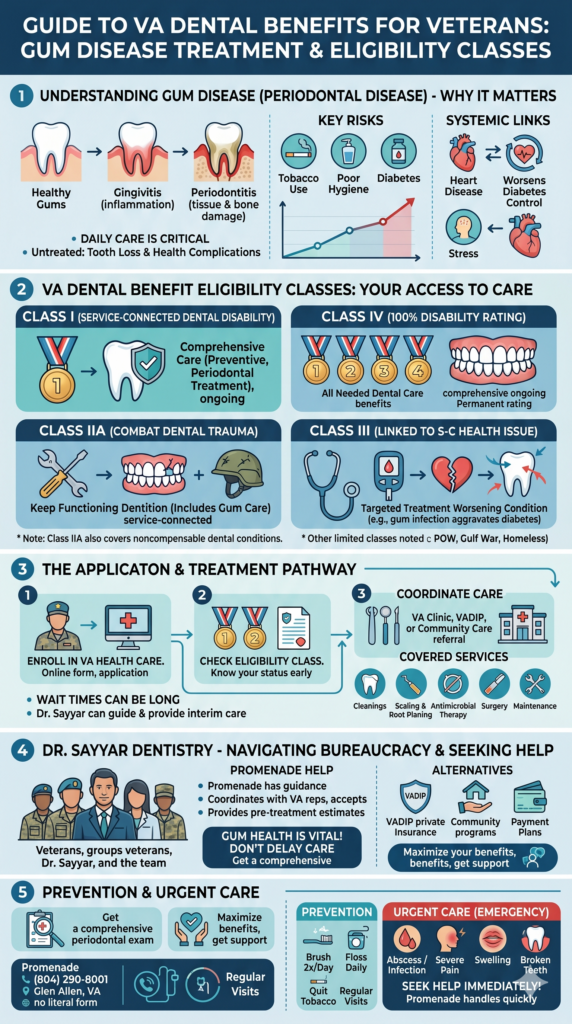
Gum disease (periodontal disease) is an infection and inflammation of the gums and surrounding structures that support the teeth. It starts as gingivitis (gum inflammation) and can progress to periodontitis, where the tissues and bone around teeth are damaged. Without treatment, advanced gum disease can lead to tooth loss and has links to other health problems. For example, veterans with diabetes are at much higher risk for gum disease, and uncontrolled periodontal infection can, in turn, make blood sugar harder to manage. In fact, VA health resources note that “you may be at greater risk for gum disease (periodontal disease) when you have diabetes,” and if gum disease is “untreated or uncontrolled,” it can worsen diabetes control. Similarly, chronic gum infections have been associated with heart disease and other systemic conditions.
Key risk factors for periodontal disease include tobacco use (common among many veterans), poor oral hygiene, stress, and underlying conditions like diabetes. It often progresses painlessly, so vets may not realize it until symptoms like red, swollen gums, bleeding, or receding gums appear. Regular dental check-ups and cleanings are essential because early-stage gingivitis can usually be reversed with professional care and good home habits.
Preventing and controlling gum disease relies on good daily oral care. Brushing twice and flossing once each day are critical – the VA’s health library calls them “your best tool against periodontal disease.” In fact, brushing and flossing daily can prevent tooth loss and may even help you avoid surgery. Other steps include a healthy diet low in sugars, regular dental cleanings, and quitting tobacco. (See our [Cavity Prevention] page for general tips on hygiene and diet – these habits also strengthen gum health.)
How VA Dental Benefits Work
Getting dental care from the VA is not automatic for all veterans. The VA uses a classification system to decide who qualifies for dental benefits. Each benefits class has its own rules, and you must meet that class’s criteria to receive care. In other words, not all veterans are eligible for VA dental coverage. This system can seem like bureaucratic red tape, but it’s crucial for determining coverage.
Veterans Affairs clearly states: “Not all Veterans are eligible for VA dental care because eligibility is divided into specific classes, and only those who meet a class’s rules can receive VA dental treatment.”. Fortunately, several classes allow for full dental benefits, including gum disease treatment. Other classes provide only limited or one-time care. We explain the main classes below – if you’re ever unsure, contact our office for help verifying your status (see “Contact Us” below).
VA Dental Benefit Classes
The VA divides dental eligibility into numbered classes. Here are the most relevant ones for gum disease care:
- Class I (Service-Connected Dental Disability): You qualify if you have a service-connected dental condition (like injuries to your teeth or mouth from service) for which you receive VA disability compensation. Class I entitles you to “any needed dental care.” In practice, this means comprehensive coverage, including preventive and periodontal treatment. If your gum disease was deemed service-connected, you fall in Class I and can get ongoing treatment (cleanings, scaling, root planing, etc.) through the VA.
- Class IIA (Combat Dental Trauma): You qualify if you have a dental condition that resulted from combat wounds or service trauma, even if there’s no disability pay for it. Also included are service-connected noncompensable dental conditions. Class IIA covers “any dental care needed to make sure you have and can keep a functioning dentition”. In other words, the VA will provide whatever dental work you need – including periodontal care – to keep your teeth healthy. (A VA Trauma Rating Decision will specify which teeth or conditions are covered.) If, for example, an injury in service damaged your mouth and contributed to gum problems, Class IIA can help.
- Class IIC (Former POWs): Former prisoners of war qualify for any needed dental care. While not specific to gum disease, former POWs receive full VA dental benefits.
- Class III (Dental Condition Linked to Service-Connected Health Issue): You qualify if a VA dentist determines that your dental problem (like gum infection) is making a service-connected health condition worse. For instance, if severe periodontitis is aggravating diabetes, heart disease, or some other condition VA already covers, you can get dental treatment. Class III coverage is limited “to treat the oral conditions that…are directly making your service-connected health condition worse”. So if a dentist confirms your gum disease is impacting a covered medical issue, you may get targeted periodontal therapy.
- Class IV (100% Disability Rating or Unemployable at 100%): If you have a 100% service-connected disability rating (or are unemployable due to service-connected conditions) on a permanent basis, you get any needed dental care. This covers all treatments – including comprehensive periodontal care. (Note: temporary 100% ratings do not qualify.)
- Class II (Gulf War Veterans, One-Time Care): This class applies if you served 90+ days in the Persian Gulf War era and apply within 180 days of discharge. It provides a one-time dental care course, but only if you meet strict requirements. This usually doesn’t help chronic gum disease, as it’s limited-time only and focused on initial treatment.
- Class IIB (Homeless Veterans Program): Homeless veterans enrolled in VA care may qualify for a one-time set of dental treatments. Importantly, this includes treatment for “moderate, severe, or complicated and severe gingival and periodontal conditions”. So homeless vets with serious gum infections can get needed care through this special program.
- Classes V & VI (Special Programs): Class V covers veterans in the Veteran Readiness and Employment program, and Class VI covers inpatients whose dental issue complicates their medical treatment. These are highly specialized; most veterans seeking routine periodontal care focus on Classes I, IIA, III, or IV.
In summary, veterans with service-connected dental injuries (Class I/IIA) or a 100% disability rating (Class IV) get full VA dental benefits, which includes gum disease treatment. Those in Class III can receive periodontal care if their gum disease worsens another VA-covered health condition. Other classes (homeless, Gulf War, etc.) offer limited or one-time care under special circumstances.
Applying for VA Dental Care
To get started, you must be enrolled in VA health care. Apply online (VA Form 10-10EZ) if you haven’t already. The VA also advises checking your benefits class before seeking dental care. Often, veterans are surprised to learn they may be eligible under a certain class once the rules are explained. For help, contact our clinic for a benefits consultation. We can walk through your service history, help explain VA rules, and coordinate with VA representatives if needed. (See our Contact Us page.)
Covered Periodontal Services
For eligible veterans, VA dental benefits can cover all standard periodontal treatments, which may include:
– Preventive cleanings and exams to manage gingivitis.
– Scaling and root planing (deep cleaning) to remove plaque/tartar under the gums. This is often the first line of treatment for periodontitis.
– Antimicrobial therapy (such as medicated rinses or localized antibiotics) to control infection.
– Surgical interventions, if necessary (like flap surgery) for advanced cases.
– Maintenance visits to monitor healing and prevent recurrence.
VA dental clinics offer these services either on-site or through community care referrals. Keep in mind that even if you qualify, wait times at VA facilities can be long for non-emergency procedures. That’s why we emphasize contacting our office – we can provide interim care and guidance.
Navigating the System and Seeking Help
Many veterans describe the VA dental system as confusing. The eligibility rules (above) are complex, and paperwork can be daunting. It’s easy to get lost in the bureaucracy. Here are some tips:
- Verify Your Eligibility Early: Don’t wait for a dental crisis. Check your VA health portal or call the VA to determine your dental benefits class. If needed, our team can help explain which class applies to you and what it covers.
- Have Documentation Ready: Keep copies of your DD214, disability rating decision, and any dental/medical records. If you claim a service-connected dental condition, documentation is key.
- Work With Your VA Dental Provider: VA dentists can often identify if your condition qualifies (especially for Class III cases). If you see a VA dentist for any other reason, mention your gum concerns so they can note it.
- Use Clinic Support: Our office is familiar with veteran benefits. We can assist with pre-treatment estimates, insurance questions, and even communicate with VA coordinators. If you call us at (804) 290-8001 or use our Contact page, we can set up an initial exam and review your situation.
Remember: Even qualified veterans sometimes fall through the cracks. If the VA turns down a claim for coverage, you still have options (see below) and we can often work with you to get necessary care anyway.
Alternatives to VA Dental Coverage
If you find you’re not eligible for VA dental benefits (for example, if your disability rating isn’t high enough or your condition isn’t service-connected), don’t lose hope:
- VA Dental Insurance Program (VADIP): The VA offers a program to buy private dental insurance at a discounted group rate. It’s available to veterans enrolled in VA health care who need additional coverage. VADIP plans (through Delta Dental or MetLife) cover many common procedures. Check VA’s VADIP page for details.
- Community Care Programs: Some veterans may get referrals to outside dentists if the VA can’t provide timely treatment. We participate with most insurance plans and may accept certain VA referrals or payback programs.
- State and Local Resources: Virginia and Richmond-area organizations sometimes offer low-cost clinics or programs for veterans. It’s worth exploring local options if VA benefits fall short.
- Payment Plans and Discounts: Our practice offers financing options and can discuss sliding scale fees for veterans. We know waiting on the VA isn’t always feasible, especially for painful gum infections. Contact us to discuss budgeting for your care.
No matter what, the health of your gums is important. Delaying care can lead to pain, tooth loss, and health complications. Even if VA funding isn’t covering you, timely treatment is critical. Our clinic in Glen Allen (serving Petersburg and central Virginia) is here to help veterans get the periodontal care they need – whether by using VA benefits or other means.
Seeking Urgent Care
Advanced gum disease can sometimes cause urgent issues like abscesses, severe pain, or swelling. These situations should be treated as dental emergencies.
- Abscess or Infection: If a gum infection spreads, it may form an abscess (pus pocket) causing throbbing pain and swelling. This is a medical emergency. You may need immediate drainage or antibiotics.
- Severe Pain or Swelling: Extreme tooth or jaw pain, especially with facial swelling or fever, requires prompt attention. Call our office at (804) 290-8001 or visit an emergency dentist immediately.
- Broken or Loose Teeth: Advanced periodontal disease can loosen teeth. If a tooth is about to fall out or break, we can often stabilize it or plan extraction to prevent further damage.
In any urgent case, do not wait for VA approval. The VA itself encourages walk-ins for urgent dental concerns. At our clinic, we handle emergencies compassionately and quickly. For details on what constitutes an emergency and what to do, see our Emergency Dentistry guide. In short: if it hurts badly or you think it might, seek help today to prevent worse problems.
Preventing Gum Disease
The best approach is to prevent or control periodontal problems early. Here are simple strategies, many of which overlap with cavity prevention:
- Brush Properly: Brush twice a day with fluoride toothpaste. Spend at least 2 minutes each time and angle the brush along the gum line. (Ask us at your visit if you’re not sure you’re doing it right – proper technique is crucial.)
- Floss Daily: Flossing removes bacteria and food between teeth that brushing misses. Even one daily floss can dramatically lower your risk of gum inflammation.
- Use Antibacterial Mouthwash: Rinsing with a chlorhexidine or similar rinse can reduce plaque buildup.
- Healthy Diet: Limit sugary and acidic foods and drinks. Eat plenty of fruits, vegetables, and lean proteins. Diets high in sugar feed the bacteria that cause both cavities and gum infections.
- Avoid Tobacco: Smoking and chewing tobacco greatly increase gum disease risk. Quitting tobacco is one of the best things you can do for your oral (and overall) health.
- Regular Dental Visits: See a dentist for cleanings at least every 6 months (or more often if recommended). Professional cleanings remove tartar you can’t reach at home and allow early intervention.
By adopting these habits, you reduce the need for costly treatments down the road. For more general oral health tips (many overlap with gum care), see our Cavity Prevention page. Prevention is a powerful form of care – even the VA notes that diligent home care may “help you not need surgery”.
About Our Clinic
Dr. Sayyar Dentistry & Associates, located in Glen Allen, VA, proudly serves Petersburg and the greater Richmond community. Our experienced and friendly team is dedicated to veterans and families alike. (Learn more about our practice and meet our doctors on our About Us page.) We specialize in comprehensive care, including periodontal treatment for gum disease.
We understand the unique needs of veterans. As one of our patients noted, our staff is “knowledgeable with insurance” and helpful in coordinating even urgent care. Whether you have VA coverage, private insurance, or need to self-pay, we work with you to find a solution.
Our modern Glen Allen office is equipped to handle everything from routine cleanings to advanced surgery. We use digital imaging and on-site milling (CEREC®) to minimize appointments. For veterans from Petersburg and beyond, we strive to make dental care as convenient as possible, with evening hours and efficient scheduling.
Frequently Asked Questions
Who qualifies for VA dental benefits? Only certain veterans qualify. You must meet the criteria of a VA dental benefits class (I, IIA, IIC, III, IV, etc.). For example, vets with a service-connected dental disability (Class I) or a 100% disability rating (Class IV) get full dental coverage. Others may get limited or no coverage. Check your VA health enrollment status and contact us to clarify your eligibility.
Does VA dental care cover gum disease treatment? Yes, if you’re eligible. Veterans in qualifying classes can receive needed periodontal treatment, just like any other necessary dental care. For instance, Class I and IV vets get “any needed dental care,” and Class IIA covers maintaining a “functioning dentition”, which includes treating gum infections. Class III may cover treatment of gum disease if it worsens a service-related condition. If you meet one of these classes, gum disease treatment (cleanings, scaling, etc.) should be covered.
Can I get ongoing periodontal care through the VA? Only in some classes. Class I, IIA, IIC, and IV provide ongoing care; Class II and IIB generally offer only one-time treatment. So, if your eligibility is Class I or IV, you can receive recurring maintenance. If you’re in Class III, you may get care to address the specific oral issue affecting your service-connected condition. If your class only covers one-time care, you may need to consider other options for long-term treatment (like private care or VADIP) after the one-time benefit is used.
What if my gum disease isn’t service-connected? If you don’t have a service connection, you might still qualify if your gum issues aggravate another service condition (Class III). Otherwise, you may not get VA-funded care. In that case, options include buying private coverage through VADIP, seeking community programs, or paying out-of-pocket. Our office can help by providing needed treatment and advising on insurance or payment plans.
How can I verify my VA dental eligibility? First, ensure you’re enrolled in VA health care. Then, review your service-connected disability rating and any dental trauma ratings on your records. You can call your VA health office or check the VA benefits portal. For personalized assistance, contact our office; our staff can review your documentation and help determine your benefits class so you don’t miss out on entitled care.
What should I do in a dental emergency? If you experience severe pain, swelling, a knocked-out tooth, or an abscess, seek help immediately. Don’t wait for VA authorization. Contact our clinic or go to an emergency dentist. Quick treatment (antibiotics, drain infections, save teeth) can prevent serious complications. (See Emergency Dentistry for details.) In most cases, faster intervention saves you from losing a tooth or developing a worse infection.
Take Action: Get the Care You Need
Gum disease is treatable, but you shouldn’t wait until it causes tooth loss or a health crisis. If you’re a veteran in Petersburg, Glen Allen, or central Virginia, let us help you navigate your options. Our friendly office is ready to answer questions about VA dental benefits, coverage, and eligibility.
Call us today at (804) 290-8001 or book an appointment online to discuss your case. We’ll review your VA benefit status, examine your gums, and recommend the next steps – whether that means moving forward with covered VA treatment or arranging care through our clinic. Don’t let confusion or delays endanger your smile. Reach out now and let us support you in getting the periodontal care you deserve.
Have a question about your smile?
Dr. Sean Sayyar and our team in Glen Allen, VA are here to help.
Related articles
Gum Disease Warning Signs & Urgent Periodontal Care in Petersburg & Glen Allen, VA

Managing Pain After Gum Disease Treatment: A Guide for Veterans in Petersburg and Glen Allen, VA