VA Dental Care: Non-Surgical Gum Therapy in Petersburg & Glen Allen, VA
Executive Summary: This guide helps U.S. military veterans in Petersburg and Glen Allen, VA access and understand non-surgical gum therapy (scaling and root planing). It explains VA dental benefit eligibility (including special one-time programs like Gulf War or Homeless Veterans dental care), how to apply for VA health and dental coverage, and what to do if you aren’t eligible. We cover community alternatives – Medicaid’s “Cardinal Care Smiles” plan (which does cover adult gum treatment), sliding-scale clinics (e.g. CVHS Petersburg), dental schools (VCU Dentistry in Richmond), and free clinics (Richmond Smiles). We define when scaling and root planing is indicated (for gingivitis/mild–moderate periodontitis), explain the procedure (often done by a dentist or hygienist under local anesthesia), and review outcomes (reduced bacteria and pocket depths). Risks are minor (temporary bleeding or sensitivity) and recovery is usually same-day normal routine. A comparison table of non-surgical options is included. We also discuss fear-reduction strategies (education, sedation, and relaxation) and point to our local resources. Veterans should apply online for VA healthcare (VA Form 10‑10EZ) before dental treatment. For local care, veterans can call our office in Glen Allen (Sayyar Family Dentistry at (804) 290‑8001) to schedule a consultation, even same-day in Petersburg if needed.
VA Dental Benefits and Eligibility
VA dental coverage is not automatic for all veterans; you must enroll in VA health care and fit a benefits category. Veterans are sorted into classes: for example, Class I (service-connected dental disability) or Class IV (100% disabled or unemployable) qualify for any needed care. Class II (Gulf War era veterans) get a one-time course of care if they apply within 180 days of discharge. Class IIA (noncompensable dental condition or combat trauma) and Class III (service-connected condition aggravating oral health) cover care needed to maintain a functioning mouth. The Homeless Veterans Dental Program (Class IIB) offers a one-time treatment course specifically to relieve severe pain or treat advanced gum disease.
To use VA dental benefits, you must first apply for VA health care (VA Form 10‑10EZ) if not already enrolled. Once enrolled, call VA Medical Center Dental Services (near Richmond or Hampton Roads) or use the VA’s online locator to find a VA dental clinic. The dental clinic staff will verify your eligibility class and scope of care. Even if you have VA coverage, you may need a referral or schedule an appointment for specialized periodontal care.
If you do not qualify for routine VA dental benefits, VA offers some alternatives. You could enroll in the VA Dental Insurance Program (VADIP), which lets eligible veterans buy private dental insurance at reduced rates. You must be signed up for VA health care or a VA dependents’ program (CHAMPVA) to get VADIP. VA Community Care (the VCCP) does not cover dental services, so veterans generally cannot use VA referrals to see a civilian dentist for gum therapy.
Accessing Dental Care Without VA Benefits
Veterans without VA coverage still have options:
- Medicaid (Cardinal Care Smiles): Virginia’s Medicaid now covers adult dental care. Under the Cardinal Care Smiles program, Medicaid-insured adults can get cleanings, fillings, extractions, dentures and gum-related treatments at no cost. (Veterans who qualify for Medicaid should verify dentist participation through DentaQuest.)
- Medicare: Standard Medicare generally does not cover routine dental services. It only pays for dental work in rare cases when treatment is a medical necessity (e.g. pre-surgery for a heart condition). Most veterans on Medicare have to pay out of pocket for gum therapy, so other options are needed.
- Community Health Centers: Federally funded health centers often offer dental care on a sliding-fee scale. For example, Central Virginia Health Services (CVHS) in Petersburg provides comprehensive general and periodontal care and offers a fee schedule based on income. An appointment at CVHS Petersburg (321C Poplar Dr) can cover scaling, root planing, and follow-up maintenance at reduced cost.
- Dental Schools: Dental schools offer low-cost care by supervised students. The VCU School of Dentistry in Richmond has dental hygiene and specialty clinics (periodontics, oral surgery) open to the public. These student clinics charge much less than private offices. For example, VCU’s patient care services include a Dental Hygiene Clinic (804-828-5285) and Oral Surgery Clinic (804-628-6637). These are great options for veterans (especially students or those on fixed income).
- Free/Charitable Clinics: Programs like Richmond Smiles (info at 804-381-2624) can connect veterans with pro bono or discounted dental treatments. The Virginia Dental Association lists resources: Richmond Smiles, donated dental services, and community clinics. Some free clinics in the Richmond-Petersburg area provide basic dental care on a first-come basis or by appointment.
- Sliding-Scale and Discount Plans: Private dentists (including our clinic) may offer payment plans or membership discounts for uninsured patients. Ask local dentists about sliding scales or dental discount plans. Our blog on Affordable Dental Care in Petersburg has tips on using insurance and finding low-cost dentists. (For example, many practices offer financing or group plans to reduce out-of-pocket cost.)
- VA-Special Programs: Remember one-time benefits: Gulf War veterans have a 180-day window after discharge for any needed dental work. Homeless veterans can sign up for the Homeless Veterans Dental Program and get up to one course of treatment for severe gum disease. These are one-time lifelines, so vets should apply if eligible.
Below is a flowchart of care pathways for a veteran needing gum therapy, including VA vs. non-VA options:

Indications for Non-Surgical Periodontal Therapy
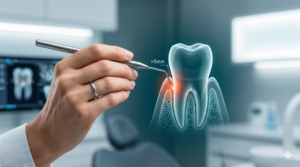
Non-surgical gum treatment is indicated when plaque and tartar have caused gingivitis or early–moderate periodontitis. Symptoms include red, swollen or bleeding gums, bad breath, and pocketing (gaps) forming around the teeth. At a dental exam, your dentist will probe gum depths and may take X-rays. Generally, scaling and root planing (SRP) is recommended for gum disease that has progressed beyond simple gingivitis (often when pockets are ≥4 mm). It’s usually the first-line treatment for mild-to-moderate periodontitis. More advanced cases might later need surgical intervention, but SRP aims to halt disease early.
Veterans should note that keeping up excellent home care (brushing twice and flossing daily) is vital. As the VA’s health library notes, daily brushing/flossing “can prevent the need for surgery” by controlling gum disease. Even after SRP, continued maintenance cleanings (every 3–6 months) are important to prevent recurrence.
Procedure Overview: Scaling and Root Planing
Scaling and root planing is a deep dental cleaning. It is a non-surgical outpatient procedure typically done by a dentist or dental hygienist. It involves two steps:
- Scaling: Removing plaque and hardened tartar from above and below the gumline. Ultrasonic tools and manual curettes are used to clean root surfaces.
- Root Planing: Smoothing (planing) the exposed root surfaces. This helps the gums reattach to the teeth and makes it harder for bacteria to re-accumulate.
Before the procedure, local anesthetic is usually given to numb the gums (and sometimes sedation/nitrous oxide for anxious patients). Then, using scalers or ultrasonic cleaners, the provider cleans each tooth’s root. Often one half (or one quadrant) of the mouth is treated per session, but depending on patient tolerance and the dentist’s plan, the entire mouth may be done in one 1–2 hour visit.
After cleaning, some dentists place antibiotic gel or give a course of oral antibiotics to further reduce infection. The dentist may also prescribe an antiseptic mouthwash (like chlorhexidine) for home use.
Recovery and Aftercare: Most patients recover quickly. Minor gum soreness or bleeding can occur for a day or two. According to Cleveland Clinic, most people can resume normal activities the same day since no surgery (incisions/stitches) is involved. You should avoid very hot/spicy foods on the day of treatment if tenderness occurs, and take over-the-counter pain relievers if needed. Continue gentle brushing and flossing (or as your dentist directs) to keep plaque off the cleaned surfaces. A follow-up exam is usually scheduled about 4–8 weeks later to check healing. In that visit, the dentist measures pocket depths again to ensure inflammation has subsided (if pockets are still deep, further treatment may be needed).
Benefits: SRP significantly reduces the bacteria that cause gum disease. It can improve breath, tighten loose teeth, and prevent tooth loss or deeper bone damage. By eliminating infection early, it often stops the progression of periodontitis and may save patients from surgery. ADA guidelines conclude that benefits generally outweigh risks, and SRP is recommended for chronic periodontitis.
Risks and Side Effects: Serious complications are rare. Possible temporary effects include: mild bleeding, gum recession (healthier gums shrink back, sometimes revealing a bit more tooth root), and tooth sensitivity to temperature. Gums may feel tender or gums may bleed a bit during flossing. The FDA and CDC report no major risks as long as infection is controlled. The VA emphasizes that deep cleaning “helps ligaments reattach” and usually prevents disease progression. If you notice excessive bleeding or pain that does not resolve, contact your dentist.
Table: Comparing Non-Surgical Gum Treatment Options
| Option | Indication | Pros | Cons | Typical Recovery |
| Routine Cleaning (Prophylaxis) | Early gingivitis, no pocketing (pockets <4 mm) | Quick (30–60 min), no anesthesia needed, minimal discomfort. Prevents disease progression. | Does not clean deep pockets; ineffective if periodontitis is present. | No downtime; back to normal immediately. |
| Scaling & Root Planing (SRP) | Moderate periodontitis (pockets ≥4 mm, bleeding) | Removes deep tartar/bacteria; often stops progression of disease. Can be done outpatient without surgery. | Requires local anesthesia; gums may be sore/bleed 1–3 days. Potential temporary sensitivity. | 1–2 days mild soreness; most resume normal routine same day. |
| Local Antimicrobials (e.g., Arestin, chlorhexidine chips) | Adjunct to SRP, small localized pockets | Can further reduce bacteria in pockets; applied directly to pocket. | Often only a supplement (not standalone). May cause local irritation or staining (chlorhexidine rinse). | Little to no downtime; normal activities. |
| Antimicrobial Mouthwash (Chlorhexidine rinse) | Mild gingivitis, post-SRP maintenance | Easy home use; reduces plaque/bacteria. | Short-term use only (risk of staining, altered taste with prolonged use). Not a substitute for cleaning. | None (routine rinse). |
| Perio Maintenance Cleanings | After initial SRP, for patients prone to relapse | Keeps pockets under control; prevents recurrence of infection. | Requires multiple visits (usually 3-4 times per year). Commitment needed. | No downtime; like routine cleaning. |
Fear Reduction: Education and Sedation Options
Dental anxiety is common. To make gum therapy as comfortable as possible, veterans can ask providers about sedation dentistry. Options include nitrous oxide (“laughing gas”), oral sedatives, or simply taking time to relax. Sedation can calm nerves and reduce discomfort during scaling. Patient education also helps – understanding each step and asking questions often eases fear. (Our blog on Sedation Options in Glen Allen discusses how sedation can make visits stress-free【7†】.) In our clinic, we use gentle technique and reassure patients throughout the procedure. Many patients report that the procedure is much less frightening once they experience it. Remember: controlling the infection now means avoiding worse problems (and surgeries) later.
Costs of Non-Surgical Gum Therapy
Scaling & root planing costs vary widely. On average in the U.S., SRP is about \$200–\$300 per quadrant. A full-mouth treatment (4 quadrants) may range roughly \$600–\$1,600 total. Factors like location, severity of disease, and insurance affect cost. Many dental insurance plans cover 50–80% of SRP costs if deemed medically necessary. For example, without insurance it might be \$150–\$400 per quadrant (full mouth \$600–\$1600); with coverage you might pay \$75–\$200 per quadrant. For veterans, costs depend on the provider: VA dental services are free if eligible. For non-VA care, sliding-scale clinics charge fees based on income. Clinics like CVHS or VCU will provide a quote and often allow payment plans. Always ask the dentist’s office for an estimate before treatment.
Local Resources and Appointment Options
For veterans in Petersburg and Glen Allen:
- Same-Day Appointments (Petersburg): If you have a painful or urgent gum problem, know that Petersburg dentists (including ours) can often arrange prompt care. Our Same-Day Dental Appointments in Petersburg service emphasizes quick walk-ins and emergency slots. You may establish care with our office or others in the city for faster treatment when needed.
- Affordable Care: Veterans can save money by using insurance or discount programs. Our blog on Affordable Dental Care in Petersburg outlines ways to use dental insurance, payment plans, and community programs. Dental schools like VCU and nonprofit programs (Richmond Smiles) provide low-cost services. As one guide notes, “[u]niversities with dental programs also provide affordable care” under supervision. Ask about payment plans or ask us how we can assist with insurance claims.
- Contact Our Office: Sayyar Family Dentistry & Associates serves Glen Allen (5231 Hickory Park Dr, Glen Allen, VA). We welcome veterans and new patients. Our team is ready to answer your questions and guide you to care. Call us at (804) 290‑8001 to discuss your needs or to schedule a periodontal evaluation. Whether you need a routine deep cleaning or are nervous about treatment, we’re here to help every step of the way.

FAQ
Q: Who qualifies for VA dental benefits?
A: Only certain veterans qualify. Generally, those with service-connected dental disabilities (Class I), 100% service-connected disability (Class IV), Gulf War vets within 180 days post-discharge (Class II), combat-trauma dental conditions (Class IIA), or those in homeless programs (Class IIB) are eligible. Others (Class III, V, VI) may get limited dental care for issues affecting medical conditions. If in doubt, apply for VA health care and the VA will determine your dental eligibility class.
Q: How do I apply for VA dental care?
A: First apply for VA health care benefits (VA Form 10‑10EZ) online at VA.gov. Once enrolled, you can contact the VA dental clinic to request services. No separate dental form is needed; just ensure your VA medical enrollment is active. You can also call the VA medical center’s Dental Service to get screened for eligibility.
Q: What if I don’t qualify for VA dental coverage?
A: If you’re not eligible for VA dental benefits, explore alternative care. You can purchase VA Dental Insurance (VADIP) if enrolled in VA health care. Check Medicaid (Cardinal Care Smiles) or Medicare coverage as applicable. Also consider community dental clinics (CVHS Petersburg offers sliding-scale fees), dental schools (VCU Richmond), or free programs (Richmond Smiles). We can help point you to local resources.
Q: What are scaling and root planing, and when are they needed?
A: Scaling and root planing (SRP) is a deep, non-surgical cleaning of the teeth and roots beneath the gums. It’s used to treat gum disease (periodontitis) once plaque and tartar have reached below the gumline. SRP is often the first step for mild-to-moderate gum disease. It removes harmful bacteria and helps gums reattach to the teeth, improving oral health.
Q: Does the procedure hurt?
A: SRP is performed under local anesthesia, so patients typically feel no pain during scaling. You may feel pressure, but anesthetic numbs the area. Afterwards, gums can be tender or slightly sore for a day or two. Mild bleeding and sensitivity to hot/cold are common and usually subside in a few days. These short-term effects are normal and go away as gums heal.
Q: How much does scaling and root planing cost?
A: Costs vary. Nationally, it averages about \$200–\$300 per quadrant. Without insurance, that’s roughly \$150–\$400 per quadrant (full mouth \$600–\$1,600). Many dental plans cover 50–80%. With good coverage, your out-of-pocket may be only \$75–\$200 per quadrant. If cost is a concern, clinics like CVHS and VCU offer much lower fees for qualifying patients.
Q: How can I reduce anxiety about gum therapy?
A: Ask your dentist about relaxation techniques and sedation. Nitrous oxide (“laughing gas”) or oral sedatives can greatly ease anxiety. Talk through each step with your provider, and bring a friend for support. We also discuss sedation options on our site (e.g. Sedation Dentistry in Glen Allen【7†】) to help patients relax. Remember: deep cleaning is quick and safe, and preventing gum disease now means avoiding extractions or implants later.
Q: How soon will my gums heal?
A: Healing is fast. Most patients feel fine by the next day. The deep-cleaned gums will shrink down slightly as infection clears; this can make your teeth feel longer but is a sign of health returning. Your dentist will check 4–8 weeks later to ensure pockets have closed up. With good home care and follow-up visits, you should see improved gum health within a month or two.
Have a question about your smile?
Dr. Sean Sayyar and our team in Glen Allen, VA are here to help.