Questions Veterans Should Ask Before Starting Gum Disease Treatment
Executive Summary
Veterans in Petersburg and Glen Allen, VA facing gum disease (periodontal disease) treatment should go into their consultation well-informed. This guide outlines 10–15 key questions veterans can ask their periodontist to understand their diagnosis, treatment options, recovery, and costs. It also covers veteran-specific issues like VA dental benefits, service-related health factors, and medication interactions. By asking these questions, veterans can ensure they make the best possible decisions for their oral health and overall well-being.
Questions Veterans Should Ask
1. What exactly is my diagnosis and how severe is it?
Understanding your diagnosis is the first step. Ask your periodontist to explain your condition clearly (for example, whether you have gingivitis or one of the stages of periodontitis) and how advanced it is. Key indicators include probing depths around your teeth and the amount of bone/attachment loss. For instance, the AAP/ADA classification uses stages I–IV based on severity (severity of tissue destruction and bone loss). Knowing this baseline helps you and your dentist agree on an appropriate treatment plan.
2. What caused my gum disease and how can I help prevent it?
Gum disease is caused by dental plaque (a bacterial biofilm) and hardened calculus on the teeth. Ask what risk factors in your situation contributed (such as smoking, diabetes, dry mouth, or certain medications) so you can address them. For example, the Veterans Health Library notes that bacteria in plaque and tartar cause chronic gum infection. Improving or eliminating those causes is key. Quitting tobacco or better controlling blood sugar can greatly improve healing. Good home care is also crucial: brushing twice daily and flossing at least once daily is the best “first-line” defense for your gums (see our cavity prevention guide for tips on effective brushing, flossing, and diet).
3. What are all of my treatment options?
Periodontitis can usually be managed with multiple approaches. A common first step is scaling and root planing (deep cleaning), where plaque and tartar above and below the gumline are removed and root surfaces smoothed. Ask how many visits this may require, and whether it includes any antimicrobial therapy (such as antibiotics or antiseptic rinses). If your gums are deeply pocketed, ask about surgical options (such as flap surgery or gum grafts) and newer alternatives like laser therapy. Also ask about tooth replacement: if some teeth are too damaged to save, inquire about implants or dentures once infection is controlled. The dentist should explain the pros and cons of each approach, for example in a table like this:
| Treatment | Pros | Cons | Typical Use |
| Scaling & Root Planing | Non-surgical; removes deep bacteria | May require multiple sessions; some discomfort | Moderate periodontitis (first-line) |
| Antibiotics/Antiseptics | Targets bacteria; adjunct to cleaning | Possible side effects (e.g., GI upset, staining) | Severe or localized infection |
| Laser/Advanced Therapy | Minimally invasive; may reduce bleeding/swelling | Not widely available; long-term evidence still emerging | Alternative to traditional surgery |
| Periodontal Surgery | Direct access to deep pockets; can regenerate tissue | Invasive; longer recovery time | Advanced periodontitis (deep pockets, bone loss) |
| Tooth Extraction & Implants | Restores missing teeth; permanent solution | More costly; requires healing (months) | Teeth that cannot be saved by other means |
Your periodontist should review these options and which are suitable for you.
4. What happens if I delay or decline treatment?
Understanding the risks of postponement can motivate timely care. Untreated gum disease tends to worsen: pockets deepen, more bone is lost, and teeth can become loose or fall out. Advanced periodontitis requires more complex (and expensive) treatment. This is especially important for veterans with other health issues: for example, severe periodontitis can negatively affect diabetes control. In short, early intervention often means simpler therapy (like deep cleaning) and a better outcome, whereas delays lead to more invasive procedures later.
5. What can I expect in terms of recovery and aftercare?
Ask about the recovery process so you can plan accordingly. Will there be pain or swelling, and for how long? (Periodontitis treatment usually involves local anesthesia, so most patients have minimal pain during the procedure.) Find out what pain medication or antibiotics will be prescribed, and whether you’ll need to eat soft foods or rest afterward. Clarify how to care for the area at home (e.g. special rinses, gentle brushing) and when you can return to normal activities or work. Having a clear aftercare plan (and written instructions) helps ensure you heal properly.
6. Do I have any sedation or anxiety-control options?
Periodontal work can be stressful or uncomfortable for many patients. Don’t hesitate to ask about sedation. Options include nitrous oxide (laughing gas), oral sedatives, or even IV sedation – depending on your comfort level and the office’s qualifications. Mention if you suffer from dental anxiety or PTSD-related panic; a caring periodontist will tailor the approach to keep you relaxed. Ensuring a comfortable experience (through sedation or strong local anesthesia) is a valid request.
7. How much will this cost, and will insurance or VA cover it?
Get an itemized cost estimate for all proposed procedures. Then review your benefits. Most dental insurance plans cover at least part of periodontal therapy, but coverage varies. VA dental coverage is very limited. Ask explicitly what your VA or Tricare benefits will pay. Generally, VA will cover “any needed dental care” only for veterans with specific circumstances: those with a service-connected dental condition (Class I) or a 100% disability rating (Class IV). If you don’t meet those criteria, standard gum treatment is usually not covered by VA. Verify what portion (if any) your insurance or VA will cover, and whether the office can help file claims.
8. Are there any veteran-specific health considerations to share?
Be upfront about your military-related health issues. Certain service exposures (like Agent Orange) have been linked to gum health. Also list all your medications (e.g., blood thinners, osteoporosis meds, PTSD treatments), as these can affect dental procedures. For instance, anticoagulants raise bleeding risk and may need adjustment; certain bone drugs can affect gum healing. If you’ve had head/neck radiation or traumatic injuries, mention that too. A knowledgeable dentist will integrate this information into the treatment plan.
9. How experienced is the periodontist with cases like mine?
You can politely ask about the clinician’s experience and training. For example, ask how many times they have performed flap surgery or placed dental implants. If advanced technology is offered (e.g. laser therapy, CBCT scans), inquire about their expertise. Since Dr. Sayyar’s Glen Allen practice serves many Petersburg-area veterans and seniors, we have treated diverse cases of gum disease. (Learn more about our team on our [About Us page].) Confidence in your provider’s skill is important.
10. Will I need maintenance or more treatment afterward?
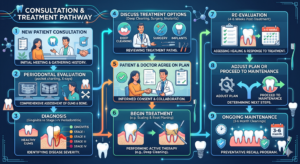
Periodontal treatment usually requires ongoing care. Ask how often you’ll need follow-up visits. Often, patients treated for gum disease are advised to have cleanings every 3–6 months instead of the usual 6, to prevent recurrence. Also clarify if additional treatments might follow: for example, scaling may be repeated or surgical procedures scheduled if needed. Understanding the full treatment timeline (including maintenance) helps you plan and commit to long-term care.
11. How does my overall health (diabetes, heart, etc.) affect this treatment?
Oral health is linked to general health. Make sure the dentist knows if you have systemic conditions. For instance, diabetes can slow healing – in fact, periodontal infection can worsen blood sugar control. Heart conditions or joint replacements might require antibiotic prophylaxis. Even stress or depression (common in veterans) can impact your ability to maintain hygiene, so discuss any mental health or mobility issues openly. The provider should adjust treatment (timing, healing expectations, medications) based on your medical history.
12. What lifestyle changes should I make to support my treatment?
Beyond brushing and flossing, ask about diet, habits, or products that could help. Smoking cessation is often advised, as tobacco severely impairs gum healing. Eating a balanced diet with less sugar supports gum health. Stress reduction (for example, using mouth guards if you grind) can also make a difference. If you use nicotine replacement (gum/patch), mention it. The dentist may suggest special toothpaste, mouthwash, or an electric toothbrush. Be ready to follow these recommendations as part of your treatment plan.
13. Am I eligible for any free or low-cost dental care?
It’s okay to inquire about financial aid. The VA and other programs sometimes have help. For example, if you recently separated from active duty, the VA offers a free dental exam (and any needed care) if you apply within 180 days of discharge. There are also VA community care and state veteran programs (for homeless vets, low-income vets, etc.) that might cover care. If Dr. Sayyar’s office has any veteran discounts or can help with VA community care referrals, ask about those. We want to make treatment affordable, so we’ll discuss options.
14. Can you explain things in plain language?
Don’t be shy about asking for clarification. Terms like “subgingival debridement,” “osseous surgery,” or “guided tissue regeneration” can be confusing. Politely ask the doctor to explain any procedure or term you don’t understand. A good dentist will be patient and may use diagrams. You have the right to full understanding before consenting to treatment.
15. What if I have more questions later on?
Finally, ask how to get answers after your visit. Will there be a patient portal, email, or phone line to your care team? For example, ask: “Can I call you if I notice more bleeding or pain?” We encourage our patients to contact us with any post-treatment concerns. Keep our office number handy and feel free to email or call any time you need clarification or have an urgent question.
VA Benefits and Coverage
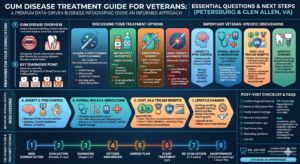
Veterans often have special dental benefits, but they vary widely. As noted, veterans with a service-connected dental condition or a permanent 100% VA disability rating qualify for “any needed dental care” through the VA. Other veterans may not have routine coverage. If you fall into one of the covered categories, you can tell your periodontist and VA that the treatment is authorized. If not, ask about VA community care referrals or if the office can help with VA paperwork. In any case, confirm your status with a VA representative and coordinate any necessary referrals before proceeding.
Post-Visit Checklist
- Confirm Diagnosis: Make sure you understand your exact condition (e.g. “moderate chronic periodontitis”) and the severity (pocket depths, bone loss).
- Review Treatment Plan: Go over each recommended procedure and its purpose. Write down any options (e.g. surgery vs. non-surgical) and why they were chosen.
- Clarify Costs/Coverage: Verify the estimated cost for each step and how it will be paid (insurance, VA, or out-of-pocket). Ensure you know what is covered.
- Understand Recovery Instructions: Get written after-care directions (medications, diet, oral care) and know how long to expect discomfort or special restrictions.
- Follow-Up Appointments: Schedule any needed follow-ups or maintenance cleanings (often every 3–6 months). Note dates and reasons.
- Home Care Tips: Brush and floss as directed. If special tools or rinses are prescribed, have them ready.
- Remaining Questions: List any points that were not fully clear and plan to call the office or ask at your next visit.
- Emergency Contacts: Save our clinic’s phone ((804) 290-8001) and our [Contact page] for quick access to scheduling or urgent questions.
Frequently Asked Questions (FAQ)
Q: Will my VA dental insurance cover gum disease treatment?
A: It depends on your VA eligibility. Veterans with a service-connected dental injury/condition or a 100% disability rating receive all needed dental care through the VA. Unfortunately, most veterans who don’t meet those criteria do not get routine periodontal care covered by VA. Check with the VA benefits office or your private insurance to see what applies. Our office can help by providing cost estimates and documentation if you need to pursue VA community care or insurance claims.
Q: Is gum disease treatment painful?
A: Most treatments use strong local anesthetic, so you should feel little to no pain during the procedure. You may experience some soreness or swelling afterward (often peaking a day or two post-treatment), which can be managed with over-the-counter or prescription pain relievers. The dentist will discuss pain control (and any sedation) before you begin. Don’t hesitate to speak up if you’re uncomfortable during treatment – additional numbing can usually be given.
Q: How do I know if I need surgery or just a deep cleaning?
A: Your dentist will base that decision on your exam. Initially, we typically perform scaling and root planing (deep cleaning) for moderate periodontitis. After a few weeks, we check your healing. If deep pockets remain (often >5mm) or infection persists, surgery (like flap surgery to clean those areas) may be recommended. The treatment plan should outline this approach step-by-step, including what results we expect to see and when we would advance to surgery.
Q: I have diabetes/PTSD – is treatment safe for me?
A: Yes, but we’ll tailor it. For diabetics, well-controlled blood sugar improves healing; untreated gum infection can make diabetes harder to manage. We coordinate with your doctor if needed. PTSD or anxiety is also common; let us know if dental visits trigger stress. We have options (sedation, breaks during treatment, a calm environment) to keep you comfortable. It’s important you share all health information so we can provide the safest, most effective care.
Q: What if I need something not covered by VA or insurance?
A: If certain recommended treatments aren’t covered, discuss alternatives. We can sometimes sequence care differently (treat highest priorities first) or use different materials to reduce costs. Also ask about our office’s payment plans or sliding scales. We encourage open conversation about finances so we can find a way to get you the care you need.
For more information or to schedule a consultation, Petersburg and Glen Allen veterans can contact Dr. Sayyar Family Dentistry in Glen Allen at (804) 290-8001 or visit our [Contact page] to book an appointment. Our team welcomes you and is here to answer any further questions.
Have a question about your smile?
Dr. Sean Sayyar and our team in Glen Allen, VA are here to help.