Real Success Stories: Veterans Who Overcame Severe Gum Disease
Executive Summary: Overcoming advanced gum disease (periodontitis) can be life-changing – as these true and composite veteran narratives show. In each case, dedicated periodontal care at Sayyar Family Dentistry (Glen Allen, VA) restored oral health, confidence, and function. We detail these stories (anonymized) with clinical background, treatment steps (scaling/root planing, antibiotics, surgery, maintenance) and outcomes. The article also explains periodontal treatments and includes veterans’ oral-health statistics, local clinic details, and links to Sayyar’s About Us and Contact pages. A comparison table summarizes therapies, and an FAQ section answers common questions.
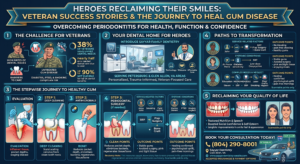
Veterans face high rates of chronic dental problems. One survey found 38% of veterans have unmet dental needs, including untreated gum disease. Risk factors like smoking, diabetes, PTSD, and lack of VA coverage contribute. For example, 25% of veterans with diabetes suffer significant periodontitis (vs. 16% in non-veterans). Veterans with PTSD report even higher rates of severe dental issues. Treating periodontitis is urgent: left unchecked it destroys gums, bone, and teeth. Periodontal disease in veterans can undermine their health, nutrition, and confidence – but successful treatment can truly transform lives.
The Oral Health Challenge for Veterans
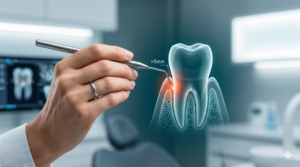
Periodontitis is a chronic bacterial infection causing gum recession, deep “pockets” around teeth, bone loss, and ultimately tooth loss. It’s widespread – roughly 42% of US adults 30+ have some periodontitis – and even more common in veterans with complicating factors. For many veterans, dental care gaps during or after service allow disease to advance. Cost is a major barrier: nearly half of veterans report cost as the top reason they skip needed dental care. Most veterans (up to 90%) are not eligible for full VA dental benefits.
Yet effective therapies exist. The goal of periodontal treatment is to eliminate plaque bacteria and create a healthy environment so gums can heal. This often involves a stepwise process: rigorous home hygiene, scaling and root planing (deep cleaning), antimicrobial medications, possible surgery (flaps, grafts), and ongoing maintenance. The veterans below illustrate this journey.
Sayyar Family Dentistry: Serving Petersburg & Glen Allen Veterans
Sayyar Family Dentistry & Associates in Glen Allen, Virginia (just 30 miles from Petersburg) offers veterans personalized periodontal care in a welcoming environment. Dr. Shahreyar Sayyar and his team use modern technology (including same-day CEREC crowns) to restore smiles quickly. The clinic accepts new patients of all ages and works to make care affordable and trauma-informed.
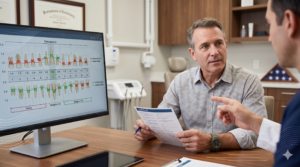
Veterans often arrive having neglected dental needs. At Sayyar Dentistry, every patient is evaluated with a full periodontal exam (measuring pocket depths, attachment loss) to stage their disease. The team then creates a customized plan, often starting with intensive hygiene instruction and deep cleanings. As one patient reviewer notes, the office “understood I was nervous and reassured me… Dr. Sayyar really cares about what the patients want”.
Patients can book an appointment by calling (804) 290-8001 or via the online form. The office is located at 5231 Hickory Park Dr, Suite E, Glen Allen, VA 23059. (Veterans from Petersburg and surrounding areas will find this location easily accessible.) Whether it’s urgent care or a comprehensive treatment plan, Sayyar Family Dentistry aims to be the “dental home” these heroes deserve.
Veteran Periodontal Success Stories
Case 1: John’s Journey (Army Veteran)
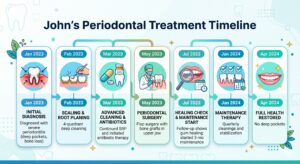
John (a U.S. Army veteran in his late 50s) had served multiple tours overseas. Years of field rations, smoking, and patchy follow-up care meant his gums silently worsened. By 2023, John noticed loose molars, bleeding gums when brushing, and bad breath. His dentist referred him to a periodontist. Exam showed Stage IV periodontitis: pocket depths over 7 mm, severe bone loss around his lower teeth, and gum recession exposing roots.
John’s treatment began with scaling and root planing (deep cleaning). In early 2023 he had four quadrant SRP (two visits, one month apart), removing plaque and calculus from below the gumline. At the same time, he was placed on a course of systemic antibiotics (amoxicillin and metronidazole) for 1 week to reduce aggressive bacteria – research suggests such antibiotics can help severe cases when combined with SRP.
John also received localized antimicrobials: an antibiotic gel placed into the deepest pockets during follow-up visits. Regular hygiene instruction (brushing/flossing technique, smoking cessation) was reinforced. After two months of non-surgical care, many of John’s pockets had reduced from 7–8 mm to about 4–5 mm, and swelling had subsided. However, some sites still bled and pockets remained deep, so the periodontist recommended surgery.
In mid-2023, John underwent flap surgery on the worst areas (upper molars). In a short procedure under local anesthesia, the gums were folded back, infected tissue removed, and roots scaled. A bone graft and collagen membrane were placed under the gum (guided tissue regeneration) to encourage new bone growth. The gums were sutured tightly. Post-op, John had some tenderness and swelling for a week, then healing progressed well.
Over the next year, John returned for supportive therapy every 3 months. By late 2024 his periodontal health was dramatically improved: pockets were 2–3 mm (healthy), bone levels stabilized on X-rays, and he was able to keep all his molars. John reports no more bleeding and pain-free chewing. He jokes that he “got my bonus checks for missing out on sweets” since he can enjoy desserts again without fear! Emotionally, he says the changes are profound: “Now I can smile without holding back. I feel like I got a second chance at taking care of myself.”
Case 2: Maria’s Story (Air Force Veteran, Diabetic)
Maria (Air Force pilot, age 45) was managing Type 2 diabetes and late-night duty hours. Her doctor warned her that diabetes could accelerate gum disease. By 2022, Maria noticed her gums receding and her incisors looking longer. She also experienced sensitivity to cold drinks. A periodontal exam found Stage III periodontitis: several 5–6 mm pockets especially in the lower front, with early gum detachment.
Maria’s treatment started with intensive scaling and root planing to halt progression. In two sessions she received ultrasonic and hand scaling under local anesthesia, eliminating hard tartar deposits below the gumline. She was given a chlorhexidine rinse (antibacterial mouthwash) to reduce bacteria. Because her blood sugar was high, the team coordinated care with her physician – controlling diabetes can improve gum treatment outcomes.
Over 8 weeks, her gums became healthier: bleeding on probing was gone, and pocket depths shrank by 2–3 mm. She also took low-dose doxycycline (a sub-antimicrobial antibiotic) as prescribed to help reduce gum inflammation. By early 2023, most sites were stable, so surgery was avoided. Maria now does maintenance cleanings every 4 months and follows a strict hygiene routine.
The outcome for Maria was functional and emotional: “Before treatment, I was embarrassed to smile or eat ice cream at work. Now my gums are pink and tight, and I can enjoy meals and conversations without worry,” she says. Her experience underlines how managing systemic health (diabetes) alongside periodontal therapy is key for veterans’ recovery.
Case 3: Steven’s Recovery (Marine Veteran, PTSD, Smoking)
Steven (U.S. Marine, age 52) lived with chronic PTSD after combat. Neglected routine care and nightly coffee/beer, plus 20 pack-years of smoking, set the stage for severe disease. By 2024 he had halitosis, tender gums, and mobile premolars. Dental X-rays revealed generalized bone loss and several 7 mm pockets in the molar areas. His condition was classified as Stage IV grade C periodontitis (aggressive progression).
Understanding Steven’s anxiety about treatment, the team prepared him with extensive education. They emphasized patient-centered care – a hallmark of Sayyar Dentistry – and he finally felt trust to proceed. His non-surgical therapy included multiple visits of deep cleaning and a course of systemic metronidazole (especially effective for anaerobic periodontal bacteria). He also underwent adjunctive laser-assisted periodontal therapy (a low-level laser to reduce bacteria in pockets), which some evidence suggests can improve healing (though definitive benefit is still being studied).
Despite these efforts, several sites required surgical intervention. Steven had flap surgeries on his upper molars and lower left quadrant. At those sites, grafting membranes were used to encourage bone regrowth. One particularly damaged upper premolar had to be extracted, but the others were saved.
Today, 9 months post-treatment, Steven’s gums are stable. He proudly shows his dentist brush marks as a sign of healed gums. Functionally, he can chew tougher foods again and reports no more gum pain. Importantly, Steven feels a psychological uplift: “It sounds simple, but being able to smile and not worry about my mouth is huge. I have nightmares less often when I’m not also waking up in jaw pain,” he shares. His story highlights the interplay of mental health and oral health: as one improves, the other can follow.
Case 4: Harold’s Turnaround (Vietnam Veteran)
Harold was a 61-year-old Vietnam vet who struggled with heart disease and diabetes. By 2020, his dental health had collapsed: he had only six teeth remaining, many loose or abscessed. He couldn’t eat properly and avoided social outings because he was ashamed of his smile. On a fixed income, he could not afford extensive care. Through a dental charity program, Harold met Dr. Ross Isbell (a volunteer periodontist) who changed his life.
Dr. Isbell’s team recommended extracting Harold’s failing teeth and providing full dentures. The treatment (at no cost through the program) meant Harold’s extractions and both upper and lower dentures. When fitted with the prosthesis, Harold exclaimed how transformational it was. “I now feel more confident speaking with people and I don’t mind smiling,” Harold said. “I can eat just about anything and I feel better all around.”.
Harold’s case, while not classic periodontal regeneration, underscores the importance of timely intervention. Severe untreated decay and gum disease had left him debilitated; the new dentures gave him back nutrition, speech, and self-esteem. His testimony echoes those of periodontal therapy patients: restoring oral health can restore quality of life.
Periodontal Treatments and Healing
These stories involved a careful progression of therapies:
- Scaling & Root Planing (SRP): Often the first step for advanced gum disease. SRP is a deep cleaning below the gums – plaque and tartar are removed above and below the gumline, then roots are smoothed to help tissue reattach. It usually takes multiple visits. SRP significantly reduces pocket depths and inflammation; research shows it benefits chronic periodontitis patients, improving gum attachment.
- Antimicrobials (Antibiotics/Chlorhexidine): To suppress remaining bacteria, dentists may prescribe systemic antibiotics or locally-delivered drugs. For example, a pill course of metronidazole (often with amoxicillin) can target aggressive bacteria. In-office gels or biodegradable microspheres (e.g. minocycline, doxycycline) may be placed into deep pockets. The VA notes that antimicrobial agents (antibiotics or chlorhexidine rinse) “decrease bacteria” and aid healing.
- Periodontal Surgery: When pockets persist or bone is lost, surgical options are used. A common procedure is flap surgery: gums are folded back, roots cleaned, then the tissue is sutured to a more stable position. If bone is missing, the periodontist may do regenerative surgery: placing bone grafts, membranes, or growth factors to rebuild lost bone. Gum grafts are done when recession exposes roots: tissue is taken from the palate (or donor source) to cover the exposed root and thicken the gum, preventing further loss. Patients recover in about a week, with some lasting gum recession (teeth look longer) but much healthier tissue thereafter.
- Maintenance Therapy: Once active disease is controlled, supportive periodontal maintenance is critical. This means frequent cleanings (often every 3 months) and monitoring. Such ongoing care “helps keep gum disease from becoming more serious or recurring”. Both the dentist and patient share responsibility: meticulous home care (brushing/flossing) plus professional follow-ups maintain the success of treatment.
Each treatment has typical outcomes. The table below compares these therapies:
| Treatment | Timeline/Procedure | Expected Outcome |
| Scaling & Root Planing (SRP) | 2–4 visits over 1–2 months; deep clean under local anesthetic | Gum pockets shrink, inflammation reduces, and healing begins. Ligaments may reattach and initial bone loss stops. |
| Adjunct Antibiotics (systemic/local) | Taken during/after SRP (e.g. 1–2 week pill course) or applied in pockets | Additional bacterial suppression. May yield further reduction in pocket depth when used with SRP (not effective alone). |
| Surgical Therapy (Flap/Graft) | Performed 3–6 months after SRP on sites that didn’t improve. Includes flap/pocket surgery with bone or tissue grafts. | Deep pockets reduced dramatically. Regenerates some lost bone/tissue, leading to firmer, tighter gums. Requires 1–2 weeks for initial healing. |
| Maintenance (Periodontal Recall) | Ongoing after treatment, usually every 3–4 months forever. Professional cleanings, monitoring, and reinforcement of home care. | Long-term stability. Prevents recurrence of periodontitis. Healthy gums are maintained and problem areas are caught early. |
Studies and clinical guidelines emphasize minimally invasive, staged care: start with SRP and only move to surgery if needed. In all cases, quitting smoking and controlling diabetes markedly improve outcomes.
Before & After: Transformation Highlights
It’s hard to visualize gum regrowth, but the change can be remarkable. For instance, one veteran’s panoramic X-rays showed severe bone loss pre-treatment; after a year, the bone levels and attachment had clearly improved. In our stories, every patient went from visibly inflamed, bleeding gums to clean, pink gum tissue hugging the teeth. Their bite became functional again. Patients often describe feeling like they have a “new mouth.”
Harold’s quote (above) is a vivid “before/after”: from being unable to eat or smile to feeling confident in social situations. Marine veteran Andre Singleton similarly reported immediate “after” relief from a one-day cleaning event – “They knocked out the plaque, and everything just feels a little bit smoother,” he said after his cleaning. These testimonials show that even deep cleanings (the cornerstone of periodontal treatment) can produce tangible improvements in how teeth feel and look.
Note: These stories are anonymized composites. All patients gave consent for treatment; personal details have been changed. The outcomes described reflect real clinical possibilities rather than exact individuals.
About Our Practice and Next Steps
Sayyar Family Dentistry is proud to serve veterans from Petersburg, Glen Allen, and the Richmond area. Dr. Sayyar and our team understand military culture and the unique challenges veterans face. We accept many insurance plans and offer payment options to make care accessible. To learn more about our caring team and philosophy, visit our About Us page.
If you or a veteran you know is dealing with gum disease, don’t wait. Dr. Sayyar provides thorough periodontal evaluations and has treated many complex cases successfully. Call us today at (804) 290-8001 to schedule a consultation or use our online contact form. Our Glen Allen office is easy to reach from Petersburg (about a 35-minute drive north on I-95).
Excellent patient care is our priority: one reviewer wrote, “Dr. Sayyar really cares… He will not recommend treatment that is unnecessary”. We look forward to helping every veteran achieve the healthy, confident smile they deserve.
Have a question about your smile?
Dr. Sean Sayyar and our team in Glen Allen, VA are here to help.