
Final Dental Checkup Guide for Veterans After Gum (Periodontal) Treatment in Petersburg & Glen Allen, VA
Executive Summary: This comprehensive guide helps veterans in Petersburg and Glen Allen, Virginia, understand the final checkup and ongoing care after periodontal (gum) treatment. It covers the typical follow-up steps, recommended timelines, periodontal maintenance protocols, home-care instructions, and warning signs of complications. We also explain how veterans can coordinate care with VA dental benefits and veteran-focused resources. By following these guidelines and working with your local dentist (e.g. Sayyar Family Dentistry in Glen Allen), veterans can maintain long-term gum health. Contact Dr. Sayyar’s office at (804) 290-8001 to schedule your follow-up or if you have any concerns.
After gum therapy (such as scaling and root planing or gum surgery), the final dental checkup confirms healing and sets up long-term maintenance. This checkup typically occurs a few weeks after treatment. We begin by updating your medical/dental history and asking about any issues or discomfort. The dentist or hygienist then examines your gums, measures pocket depths (periodontal probing), and compares them to pre-treatment values to assess improvement. X-rays may be taken if needed. Cleaning is performed to remove any remaining plaque or calculus, often deeper than a routine cleaning. The clinician will review your daily home care (brushing, flossing, rinsing) and make any adjustments. Finally, a maintenance plan is set up—often alternating visits between the general dentist and a periodontal specialist—to monitor your gums over time.
Post-Treatment Checkup Steps for Veterans
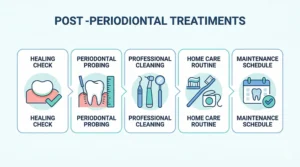
After gum treatment, veterans should expect a structured series of follow-up visits. The first follow-up depends on the procedure: for surgical treatment, a visit is usually scheduled within the first week to remove stitches and check initial healing. For non-surgical therapy (like scaling and root planing), the first evaluation is often around 4 weeks later. At these visits, the dentist or hygienist will:
- Check Healing: Inspect the surgical site or deep cleaning areas. Remove any sutures (if placed) and ensure the gums are healing without infection.
- Measure Gum Health: Perform a new periodontal charting (probing depths, attachment levels) to see how much healing occurred. A healthy site is usually ≤3 mm depth; deeper pockets may need additional therapy.
- Remove Debris: Clean around the gums. In surgical cases, gentle cleaning may resume, while in scaling cases deeper root surfaces are already cleaned.
- Assess Pain/Swelling: Ask about any lingering pain or swelling. Normal healing may involve mild tenderness, but severe pain or prolonged swelling is not expected.
- Plan Next Steps: Based on findings, the dentist will decide if you are stable or need more treatment. If pockets are still 4–5 mm, additional non-surgical therapy (sometimes with antibiotics) may be done. If pockets are very deep with bone loss, surgical options (e.g. flap surgery, grafting) might be considered. Otherwise, if your gums have healed well (pockets ~3 mm or less), the focus shifts to periodontal maintenance.
Tip: Communicate openly about discomfort. Minor sensitivity is normal, but report any sharp increase in pain, fever, or heavy bleeding to your dentist promptly. These could signal complications.
After this initial post-treatment phase, the final checkup (sometimes called a “reevaluation” or 3-month recheck) confirms treatment success. At that time, your dentist will likely document stabilized pocket depths, ensure inflammation is gone, and then set a long-term maintenance schedule. All veterans should receive a detailed review of home care and lifestyle factors at this point.
Follow-Up Timeline and Frequency
Veterans should follow a clear timeline of follow-up appointments after gum therapy. Below is a general schedule, which your dentist will tailor to your situation:
| Follow-Up Stage | Timing After Treatment | Purpose and Notes |
| 1st Post-Op Visit (Surgery) | ~1 week | Inspect surgical sites, remove sutures/dressings, ensure initial healing. |
| Initial Reevaluation (Nonsurg) | 3–4 weeks | Re-examine healing after scaling/root planing; measure pocket depths, compare to baseline. |
| Secondary Check | 4–8 weeks | Final assessment of tissue healing and inflammation resolution; plan maintenance. |
| First Maintenance Visit | 3–4 months (≈12–16 weeks) | Provide a cleaning (removing new biofilm), probe pockets, and reinforce home care. |
| Subsequent Maintenance | Every 3–6 months (as needed) | Continue periodontal maintenance indefinitely for at-risk patients. Frequency is risk-based: high-risk patients (smokers, diabetics, advanced disease) often return every 3 months; others may be seen every 4–6 months. |
| Annual Periodontal Evaluation | Once per year | As recommended by the AAP, have a comprehensive exam (CPE) to reassess overall gum health. |
Veteran patients often require frequent recall. In fact, ADA notes that periodontitis is a chronic condition requiring lifelong supportive care. Many studies agree that more frequent visits (about every 3–6 months) help maintain the results of gum therapy. For example, one review found that bacterial levels in gum pockets can rebound roughly 9–11 weeks after treatment, suggesting recall visits should be at least every 3 months. Your dentist will work with you to set a schedule that fits your healing and risk profile.
Periodontal Maintenance Protocols
Once active treatment is complete, veterans enter a periodontal maintenance phase. This is an ongoing, preventive program to keep gum disease from returning. Key components of periodontal maintenance include:
- Medical/Dental History Update: At each visit, review any new health changes or medications that affect your gums.
- Oral Examination: Check all soft tissues in the mouth for inflammation, recession, or lesions.
- Periodontal Probing: Measure pocket depths around every tooth. Every maintenance visit should include full-mouth probing and charting, regardless of the recall interval.
- Plaque and Tartar Removal: Thorough cleaning below the gum line. This often involves scaling and root debridement where needed, sometimes beyond the standard prophy cleaning.
- Polishing and Fluoride: Smooth and polish teeth; apply fluoride or antimicrobial rinses as appropriate.
- Radiographs (X-rays): Taken periodically (often yearly) to monitor bone levels or check areas not fully visible by probing.
- Oral Hygiene Review: Assess your brushing/flossing and provide education tailored to you. Discuss risk factors like smoking or diabetes, which must be managed to protect gum health.
- Treatment Planning: Decide if further active therapy is needed (e.g. re-treatment of pockets >5 mm). Discuss with the patient any necessary interventions.
According to professional guidelines, periodontal maintenance is more intensive than a routine cleaning. The table below compares a periodontal maintenance visit to a standard prophylaxis (healthy cleaning):
| Visit Component | Periodontal Maintenance (D4910) | Regular Cleaning (Prophylaxis, D1110) |
| Medical/Dental History Update | ✔️ Yes – update at each visit | ✔️ Yes – typically updated |
| Oral Soft Tissue Exam | ✔️ Yes – comprehensive | ✔️ Yes |
| Periodontal Probing/Charting | ✔️ Full-mouth probing (every visit) | ❌ No (usually only if indicated) |
| Tartar/Calculus Removal | ✔️ Yes – scaling and debridement below gums where needed | ✔️ Yes – scaling above gums (supragingival) |
| Tooth Polishing | ✔️ Yes | ✔️ Yes |
| Fluoride Application | ✔️ Often (especially if high caries risk) | ✔️ Often (routine) |
| Radiographs | ✔️ As needed – more frequent in disease | ✔️ As needed – less frequent |
| Home Care Counseling | ✔️ Yes – emphasize improved self-care and risk factor management | ✔️ Yes – standard instructions |
| Goal of Visit | Maintain/detect recurrence of disease; prevent tooth loss | Prevent disease in healthy mouths |
Studies show that without regular maintenance, periodontal patients are at much higher risk of tooth loss. Therefore, veterans should commit to their scheduled maintenance visits. Our office (and VA dental programs) will remind you when follow-ups are due to help keep you on track.
Home Care Instructions
Daily oral hygiene is crucial after gum treatment. Veterans should follow these home care guidelines:
- Gentle Brushing: Brush twice daily with a soft-bristled brush. Be gentle around the treated areas until fully healed. You may use a non-prescription fluoride toothpaste to strengthen enamel.
- Flossing or Interdental Cleaning: Clean between teeth daily. Be careful not to irritate stitches (if any) in the first week, but maintain hygiene around gums.
- Salt-Water Rinses: Rinsing gently with warm salt water (½ teaspoon salt in 8 oz water) 2–3 times a day can soothe gums and reduce inflammation.
- Pain Management: If you have soreness, take over-the-counter pain relievers (e.g. ibuprofen or acetaminophen) as directed.
- Diet: Eat soft foods for a few days after treatment. Avoid hard, crunchy, spicy, or acidic foods until the gums have healed to prevent irritation.
- Avoid Tobacco: Smoking or vaping delays healing and worsens periodontal disease. We strongly advise abstaining completely, especially in the healing phase.
- Attend All Appointments: Keep follow-up visits as scheduled so the dentist can monitor healing.
If you develop any unusual symptoms at home—such as sharp pain unrelieved by medication, fever, persistent swelling, or pus from the gums—contact the dental office immediately. These could be signs of infection or other complications.
For preventive care beyond the gum treatment, continue routine cavity prevention: brush with fluoride toothpaste, floss daily, and use any prescription rinses if given. (For more on preventing tooth decay, see our [Cavity Prevention] page.)
Signs of Complications
Most gum treatments heal without issue, but veterans should remain vigilant for complications. Warning signs that warrant prompt dental attention include:
- Severe or Increasing Pain: Pain that worsens over time or doesn’t improve with medication may signal infection or dry socket (if a tooth was extracted).
- Persistent Bleeding: Gums may bleed lightly at first, but heavy or prolonged bleeding beyond 24 hours is not normal.
- Fever or Chills: A low-grade fever can be normal, but a sustained fever suggests an infection.
- Excessive Swelling or Redness: Some swelling is expected, but rapidly increasing swelling of the gums, face, or jaw, or red streaks on the skin, could indicate infection.
- Pus or Discharge: Any yellowish or green pus from the gums is a clear sign of infection.
- Difficulty Breathing or Swallowing: (This is an emergency) If your airway feels threatened by swelling, seek emergency care.
- Non-Healing Tissue: If areas of the gum remain open or painful beyond 2 weeks, let your dentist know.
These signs are uncommon but serious. Don’t wait if you notice them—early intervention prevents more serious problems. Dr. Sayyar’s office offers [Emergency Dentistry] services for urgent issues, and we are prepared to treat post-op complications quickly.
Coordination with VA Benefits and Veteran Resources
Veterans have special options for dental coverage. Eligible veterans (e.g. with service-connected dental conditions or 100% disability) can receive comprehensive dental care through the VA. Check the VA’s guidelines: Classes I, IIA, IIB, and others qualify for necessary treatments (which include periodontal care). If you qualify, your periodontal checkups and maintenance should be covered.
Even if you don’t meet VA direct-care criteria, VA-sponsored programs can help. The VA Dental Insurance Program (VADIP) offers discounted private dental insurance plans to veterans enrolled in VA healthcare. VADIP coverage includes preventive care, cleaning, and periodontics, which can offset costs at private clinics like ours.
For veterans experiencing financial hardship, non-profit programs can assist. For example, Everyone for Veterans provides free comprehensive dental care to eligible low-income veterans nationwide. You can apply online to be connected with volunteer dentists. Additionally, local resources like the Virginia Dental Association Foundation’s Donated Dental Services (DDS) program occasionally support disabled adults (including veterans) with donated care.
To coordinate care, gather your DD214 and any VA dental award letters (available via the VA eBenefits website). We can help you apply benefits or direct you to VA clinics. Even if your gum treatment is done in our Glen Allen office, we can bill your VADIP or VA insurance. Our staff is familiar with insurance and will help ensure you get full benefits.
Long-Term Gum Care Strategies
Gum disease is chronic, so veterans must stay committed to long-term care. Key strategies include:
- Regular Maintenance Visits: Continue the maintenance schedule indefinitely. Remember ADA guidance that periodontitis patients remain at risk and require life-long care to prevent recurrence.
- Risk Factor Management: Control systemic health factors. If you have diabetes, keep it well-managed (good glycemic control helps gum health). If you smoke, seek programs to quit—smoking doubles the risk of periodontal relapse. Discuss nutrition and overall health with your dentist.
- Meticulous Home Care: Never slack on daily hygiene. Floss each night and brush after meals if possible. Use interdental brushes or antimicrobial rinses if recommended.
- Monitor Changes: Look out for early signs of gum inflammation (e.g. bleeding, soreness) and report them at once. Early retreatment (scaling or antibiotics) can often nip recurrence in the bud.
- A Team Approach: As emphasizes, periodontal disease links to overall health (heart disease, diabetes, etc.). Your dentist will coordinate with your physicians to optimize health. Let us know any new diagnoses.
- Education: We will educate you on how conditions like diabetes or medications can affect your gums. Being informed empowers you to reduce your risk factors.
By following these strategies, veterans can preserve their teeth and avoid complications like tooth loss. Remember, even if your gum condition is stabilized, you remain a “periodontal patient” who needs ongoing vigilance.
Building a Long-Term Patient-Practice Relationship
At Sayyar Family Dentistry in Glen Allen, we value long-term relationships with our patients. We welcome veterans and families from Petersburg and surrounding areas, and we strive to provide family-focused, compassionate care. Dr. Sayyar and our team listen to your concerns and work with your VA benefits to plan appropriate treatment. Our patients often comment that we “treat you like family” and explain care options clearly.
Call us early: If you notice any issues after your gum treatment, calling right away can prevent bigger problems. Our phones are answered by friendly staff who can advise you. For urgent issues, we have [Emergency Dentistry] protocols to see you quickly.
Stay connected: We may send reminders for recalls. You can also sign up for our newsletter or follow our website for tips. We encourage open communication—bring any questions to every visit. Over time, we’ll get to know you and your dental history, making each visit more personalized.
Ready to help: Concerned about soreness or need to book your final checkup? Contact Sayyar Family Dentistry today at (804) 290-8001 or through our [Contact Us] page to schedule an appointment. We’re conveniently located in Glen Allen, VA (near Short Pump) and serve Petersburg veterans—let us be your partner in oral health.
FAQ
Q: When should I schedule my first follow-up after gum treatment?
The timing depends on the procedure. For non-surgical treatment (scaling/root planing), a reevaluation is typically scheduled about 3–4 weeks after therapy. For surgical procedures, an initial post-op visit is usually within 1 week to remove sutures and check healing. Follow your dentist’s advice for exact timing.
Q: How often should I have periodontal maintenance visits?
Most patients benefit from maintenance visits about every 3–4 months. Your dentist will adjust this based on your risk. High-risk veterans (e.g. smokers, diabetics, advanced disease) often need recalls every 3 months, while others may extend to 4–6 months. Annual comprehensive evaluations are also recommended.
Q: What do periodontal maintenance visits include?
A maintenance visit includes updating your medical/dental history, checking soft tissues, probing all gum pockets, cleaning below the gum line (scaling/debridement), polishing teeth, and reviewing your home care. X-rays may be taken if needed. Essentially it is a deeper cleaning and exam than a regular cleaning to prevent recurrence.
Q: What signs should prompt a dental visit after gum treatment?
Contact your dentist if you experience symptoms like severe pain unrelieved by medication, heavy or prolonged bleeding, fever, increased redness or swelling, pus from the gums, or difficulty breathing/swallowing. These can indicate infection or other complications. Early treatment is important.
Q: Are follow-up checkups covered by VA dental benefits?
Veterans with qualifying VA dental eligibility generally have coverage for necessary treatments, which includes gum disease therapy and follow-up care. If not eligible, you may purchase VA Dental Insurance (VADIP) at reduced rates. Nonprofits like Everyone for Veterans may also offer free care for low-income vets. Be sure to discuss your VA benefits with the dentist’s office.
Sources: Authoritative periodontal care guidelines and VA resources were used in this guide (see inline citations). The advice here is consistent with ADA/AAP standards and VA dental policies. For personalized guidance, schedule an appointment with Dr. Sayyar’s office.