

Hidden Costs of Ignoring Gum Disease for Veterans
Executive Summary: Untreated gum disease (periodontitis) carries substantial hidden costs that extend far beyond the dentist’s office – economically, physically, and socially – especially for veterans. This report examines how neglected gum disease drives up dental expenses and health care costs, leads to tooth loss, and worsens chronic conditions, creating a heavy burden on veterans and caregivers in Petersburg/Glen Allen, VA. Veterans face higher rates of periodontal disease and tooth loss than the general population, yet most lack VA dental benefits (85% ineligible). We present data-driven analyses of direct treatment costs (cleanings, surgery, dentures) versus indirect costs (lost wages, productivity, systemic illness) and compare tooth loss among veterans to civilians. This in-depth review uses authoritative sources (CDC, VA/AIDPH, ADA, AAP) and local clinic details, and includes tables, mermaid diagrams, FAQs, and clear calls to action.
Economic Impact of Untreated Gum Disease
Gum disease is often “silent” until advanced, but its economic consequences are huge. Direct dental care costs skyrocket when disease is ignored. For example, a full-mouth deep cleaning (scaling & root planing) averages $500–$1,200. In contrast, a single tooth extraction (often needed for advanced disease) averages $177, and replacing one tooth with an implant plus crown costs $1,500–$6,000. Failing to treat early gum disease can force more expensive interventions – periodontal surgery, dentures or implants – which may total many thousands of dollars per patient.
By contrast, preventive care is far cheaper. Routine cleanings, fluoride treatments, and good home hygiene (brushing/flossing) can catch gum inflammation early and avoid surgery. (Our [Cavity Prevention] guide discusses brushing and flossing techniques to maintain healthy gums.) Investing in prevention saves money: the American Academy of Periodontology notes that untreated gum disease costs Americans an estimated $154 billion annually. In comparison, early intervention (e.g. a few hygienist visits) is a small fraction of that.
| Cost Category | Examples / Impacts (U.S.) |
|---|---|
| Individual Treatment (Direct Costs) | • Deep cleaning (scaling & root planing): $500–$1,200 full-mouth • Simple tooth extraction: ~$177 (range $137–$835) • Dental implant (per tooth): $1,500–$6,000 • Dental prosthesis (dentures/bridges): $1,000–$3,000+ (Plus X-rays, antibiotics, ongoing care) |
| Indirect Costs to Veteran and Employer | • Lost wages and productivity due to pain or tooth loss. Nationwide, $46 billion in productivity is lost each year from untreated oral diseases. Dentally affected veterans report missed work (heart-disease vets missing 4× more work if no dental care). • Lower job performance and quality of life (3 million veterans feel self-conscious about dental issues). |
| Health System & Societal Costs | • Emergency dental visits and advanced care. In 2017, ~2.1 million U.S. ER visits were for dental emergencies, many linked to untreated infection. Such visits strain safety-net systems and Medicaid. • Exacerbated chronic diseases: gum infections drive up costs for heart disease, diabetes care, etc. (see next section). This inflates VA and Medicare spending. |
In short, ignoring gum disease replaces preventive fees with high-price interventions and economic losses. Prevention and early treatment (scaling, hygiene) cost a few hundred dollars and saves thousands. Nationwide, almost $46 billion in productivity is lost each year to untreated dental disease. For veterans – already at higher risk of dental problems – the stakes are particularly high.
Tooth Loss and Veterans’ Oral Health
Gum disease is the leading cause of adult tooth loss. Veterans are disproportionately affected. In Virginia, 6% of veterans have lost all their natural teeth (edentulous), more than triple the ~2.0% edentulism rate in the general U.S. adult population aged 20–64. (For context, among all U.S. adults 65+, ~19% are edentulous.) Table below summarizes tooth loss rates:
| Population | Edentulism (All-natural-teeth lost) |
|---|---|
| U.S. Adults (age 20–64, all races) | 2.0% (age-adjusted estimate) |
| U.S. Seniors (65+ yrs) | ~19% overall |
| Virginia Veterans (all ages, VA report) | 6% |
| Petersburg/Glen Allen Veterans (local context) | Data not specified |
In short, ignoring gum disease replaces preventive fees with high-price interventions and economic losses. Prevention and early treatment (scaling, hygiene) cost a few hundred dollars and saves thousands. Nationwide, almost $46 billion in productivity is lost each year to untreated dental disease. For veterans – already at higher risk of dental problems – the stakes are particularly high.
Tooth Loss and Veterans’ Oral Health
Gum disease is the leading cause of adult tooth loss. Veterans are disproportionately affected. In Virginia, 6% of veterans have lost all their natural teeth (edentulous), more than triple the ~2.0% edentulism rate in the general U.S. adult population aged 20–64. (For context, among all U.S. adults 65+, ~19% are edentulous.) Table below summarizes tooth loss rates:
Veterans also exhibit higher periodontal disease prevalence. A national report found 42% of veterans self-report gum disease – roughly on par with ~50% of U.S. adults over age 30 showing signs of periodontitis. Moreover, veterans are 60% more likely to have tooth decay and have on average more missing teeth than civilians. Contributing factors include higher smoking rates, past combat injuries, medications causing dry mouth, and gaps in routine care during or after service.
This excess tooth loss has serious implications: lost teeth impair chewing and nutrition, raise risk of malnutrition, and necessitate costly prosthetics (dentures or implants). In older veterans especially, edentulism can severely diminish quality of life and health (chewing difficulty is linked to poorer diet). We have a local family dentistry clinic ready to address this: Sayyar Family Dentistry & Associates in Glen Allen welcomes new patients of all ages, including veterans from Petersburg and surrounding areas. (See our [About Us] page for practice details or [Contacts] for location/contact.)
Access Barriers and VA Dental Benefits
Unlike civilian Medicare/Medicaid, VA health benefits rarely cover routine dental care. In fact, 85% of veterans are ineligible for VA dental programs. Only veterans with specific service-connected dental conditions, POWs, or other narrow categories qualify. Consequently, veterans pay ~65% more out-of-pocket for dental care than civilians. High out-of-pocket costs can deter timely treatment, letting periodontal disease worsen unchecked. Indeed, veterans without dental coverage often delay care until in pain or facing tooth loss.
Local impact: Many Petersburg-area veterans may not know about limited VA eligibility. It’s important they seek care proactively. Our clinic offers payment plans and accepts most insurances, easing the burden. Early periodontal care (thorough cleanings, education) is covered by dental insurance, far cheaper than the cost of ignoring disease (see table above).
Systemic Health Complications of Gum Disease
Gum disease is not just an oral problem. Chronic periodontal infection fuels inflammation that affects the whole body. A robust body of research links periodontitis to many systemic conditions:
- Cardiovascular Disease: Bacterial byproducts from gum pockets can enter the bloodstream, contributing to artery plaque and inflammation. People with severe gum disease have higher rates of heart attack and stroke. Indeed, heart-disease patients incur higher health costs if their oral health is poor.
- Diabetes: Gum disease and diabetes form a vicious cycle. Diabetes weakens gum tissue and healing, while periodontal inflammation worsens blood sugar control. Diabetic veterans with untreated gum disease often need higher medical care (and miss work) than those who get regular dental care.
- Respiratory Infections: Oral bacteria can be inhaled or aspirated, contributing to pneumonia and exacerbating chronic lung conditions. This is especially critical for older veterans.
- Pregnancy Outcomes: Inflammation markers from periodontitis may increase risk of preterm birth or low birth weight. Female veterans and spouses should note that good gum care benefits pregnancy.
- Rheumatoid Arthritis: RA patients often have more severe periodontitis and vice versa – inflammation aggravates both conditions.
- Cognitive Decline: Emerging studies associate chronic oral infection with faster cognitive decline and Alzheimer’s disease. Maintaining oral hygiene may thus have long-term brain health benefits.
In summary, ignoring gum disease can compound chronic illnesses. Veterans – who have higher rates of heart disease, diabetes, and PTSD (which often leads to neglected self-care) – are particularly at risk. The American Academy of Periodontology warns that “long-term inflammation related to gum disease has been associated with heart disease, rheumatoid arthritis, worsened glycemic control among people with diabetes, an increased risk of preterm birth, and increased cognitive decline in patients with Alzheimer’s”. From a cost perspective, when a veteran with heart disease skips dental care, the annual cost of lost workdays can be four times higher than if their gums were treated.
Action: Veterans and caregivers should view periodontal care as part of overall health management. Regular dental cleanings and gum checks can help control diabetes, improve heart health, and even potentially reduce medication needs. Our team works with VA case managers and caregivers to integrate oral health into veterans’ health plans.
Progression of Periodontal Disease
Periodontal disease develops in stages over time, each more damaging and difficult to reverse. A simplified timeline of progression is shown below:
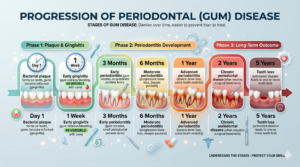
Timeline Explanation: Periodontal disease begins with plaque buildup. Within days, gums may become inflamed (gingivitis) – swelling and bleeding upon brushing. Crucially, gingivitis is reversible with thorough cleaning. If neglected, bacteria infiltrate deeper gum tissues. Within weeks to months, periodontitis sets in: the gums pull away, creating “pockets” where bacteria thrive. Over months to years, the infection destroys the alveolar bone supporting the teeth, causing gum recession, tooth mobility, and eventually tooth loss. The Champaign Dental Group emphasizes that gingivitis “often develops quietly, without obvious symptoms, until it becomes more serious”. By the time teeth feel loose or painful, extensive damage has occurred.
Veterans should be aware that even mild symptoms matter. Bleeding gums, bad breath, or gums that look receded are warning signs. At these stages, deep cleaning (scaling/root planing) can often halt disease. Otherwise, surgery or tooth removal may be needed. Our clinic in Glen Allen is equipped with modern periodontal therapies (including same-day CEREC® crowns) to restore teeth lost to gum disease.
Care Pathways and Prevention
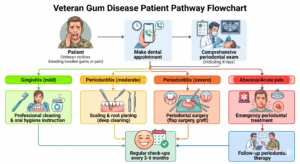
Addressing gum disease involves a clear care pathway. The flowchart below outlines typical steps from symptom to treatment:
• Screening/Exam: At your visit, the dentist measures pocket depths and may take X-rays. This diagnoses the stage (gingivitis vs periodontitis) and any bone loss.
• Mild Disease (Gingivitis): A thorough cleaning plus daily brushing/flossing can often return gums to health. Preventive care (like fluoride or sealants) and patient education are emphasized (see our [Cavity Prevention] page for brushing/flossing tips).
• Moderate Periodontitis: We perform non-surgical scaling and root planing – a deep cleaning under the gums. Antibiotics or antiseptic rinses may be used. Multiple visits may be needed. This can stop disease progression and promote gum reattachment.
• Advanced Periodontitis: Surgical options (such as gum flap surgery or bone grafting) may be necessary to eliminate deep pockets and regenerate tissue. After surgery, meticulous maintenance is critical.
• Emergency Situations: If a dentist finds an abscess or the veteran has severe pain/swelling, prompt treatment (draining infection, possibly root canal or extraction) is done to prevent spread. Our [Emergency Dentistry] services are available for urgent needs.
Throughout all stages, preventive care and maintenance are key. Regular hygiene visits (every 3-6 months) dramatically reduce the chance of flare-ups. Dentists also screen for risk factors (smoking, diabetes) and coordinate with physicians if necessary. For veterans with certain conditions (like diabetes), our team emphasizes more frequent cleanings.
When periodontal disease is identified and treated promptly, advanced complications and costs are prevented.
Call to Action: Veterans in Petersburg/Glen Allen should not wait. If you experience any gum symptoms or have risk factors, contact our clinic now. Call us at (804) 290-8001 or request an appointment online. Early care means simpler treatment – and we welcome veterans of all ages. Our [Contacts] page shows our address (5231 Hickory Park Dr, Glen Allen) and hours.
Frequently Asked Questions
Q: What happens if I ignore gum disease?
A: Gum disease will progress from gingivitis (gum inflammation) to periodontitis, destroying the bone supporting teeth. This leads to loose teeth and eventual tooth loss, which requires costly dentures or implants. It also worsens chronic health issues (heart disease, diabetes, etc.). Ignoring gum disease can create thousands of dollars in extra dental and medical costs.
Q: Are veterans more likely to have gum disease?
A: Yes. Veterans report higher rates of gum disease than civilians. For example, a national report found 42% of veterans have gum disease, versus about 50% of U.S. adults over 30. Veterans also tend to have more tooth decay and missing teeth due to factors like past deployments, stress, or medications that affect oral health.
Q: Does the VA pay for gum disease treatment?
A: Unfortunately, most veterans are not eligible for routine dental care through the VA. Only certain service-connected conditions (e.g., jaw injuries) or special categories qualify. In practice, 85% of veterans are ineligible for VA dental benefits. That means most vets must seek private dentists. Many VA-enrolled veterans purchase private dental insurance or pay out-of-pocket; note that vets pay about 65% more in dental costs than non-veterans. Our practice works with veterans to use any insurance or payment plans available.
Q: How does gum disease affect other health problems?
A: Chronic gum infections can worsen systemic illnesses. For instance, untreated periodontitis makes blood sugar control harder for diabetics and raises heart disease risk. Gum inflammation contributes to overall inflammation load in the body. Treating gum disease often improves diabetes management and may reduce risk of heart attack or stroke. It also helps with arthritis and can lower risk of preterm labor in pregnancy.
Q: What preventive steps can I take?
A: Daily brushing with fluoride toothpaste, flossing, and avoiding tobacco are the first lines of defense. Regular dental check-ups are essential: even if gums bleed, show up and get a professional cleaning. Use fluoride rinses or high-fluoride toothpaste if recommended. At our office, we also apply sealants or topical antimicrobials when needed. See our [Cavity Prevention] page for general tips on brushing, flossing, and diet. Remember, prevention and early treatment save money and teeth.
Q: How can I schedule an exam for gum disease?
A: Call (804) 290-8001 or visit our [Contact Us] page to book an appointment. We welcome veterans and their families. During your visit, our team will perform a full periodontal evaluation and recommend a personalized care plan. Prompt care is crucial – don’t wait until pain or tooth loosening occurs.
Q: What about emergency situations like a dental abscess?
A: A gum abscess (deep infection) is a dental emergency. If you have severe swelling, fever, or throbbing pain, seek care immediately. Our [Emergency Dentistry] services are equipped to handle abscess drainage, root canal therapy, or extractions to save your health. Prompt emergency treatment can prevent the spread of infection and reduce overall costs.
Sources
We drew on data from federal and professional sources. Key references include CDC oral health reports, VA/veteran health analyses, and dental research from ADA/AAP. For local information on our practice and services, see our clinic’s pages (cavity prevention, emergency dentistry, about us, and contact).