
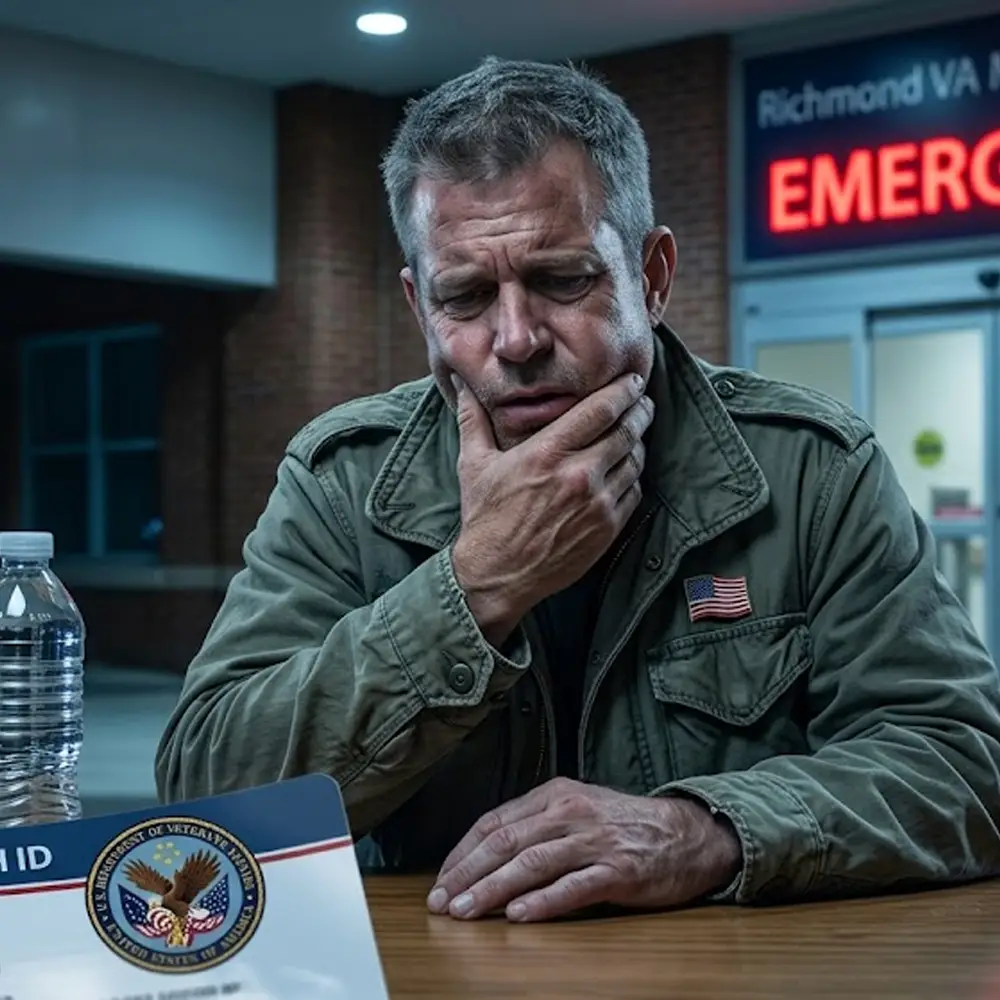
Executive Summary: Veterans facing sudden, severe gum pain or swelling must act quickly. The VA will treat any veteran’s dental emergency as a one-time humanitarian service – even if not normally eligible for dental benefits. In practice, this means you can present to a VA facility (e.g. Richmond VA Medical Center at 1201 Broad Rock Blvd) and receive urgent treatment (pain relief, infection control) to “address acute pain or condition endangering health”. Non-VA options (community clinics, emergency dentists, ER) also exist. Key steps: recognize red flags (extreme pain, gum abscess, facial swelling); seek immediate care; bring VA ID, service records, med list and sign any required forms (like VA Form 10-2570g). This guide details eligibility, rapid-access pathways, clinical management of severe gum infections, required documentation, local resources (Petersburg/Glen Allen), patient aftercare, barriers/solutions, and a clear call-to-action.
VA Dental Coverage & Emergency Eligibility
- VA Dental Benefits Are Limited. Only certain veterans (e.g. 100% disabled, former POWs, Purple Heart recipients, or those in special programs) qualify for routine VA dental care. Most veterans do not have ongoing VA dental coverage.
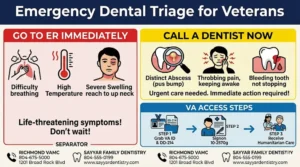
- Emergency (“Humanitarian”) Care for All Importantly, all veterans with an urgent dental condition can get at least palliative treatment at VA. VA policy states that outpatient emergency dental care will be provided “as a humanitarian service to individuals who do not have established dental eligibility,” limited to relieving pain or life-threatening infection. In other words, if you walk into a VA facility with a raging gum abscess or uncontrolled bleeding, the dentist will typically provide one-time care (drain abscess, give antibiotics, pain meds) even if you weren’t otherwise eligible. You must sign VA Form 10-2570g (“Dental Outpatient Emergency Referral & Treatment Record”) acknowledging the emergency nature (and any charges, if applicable).
- Veterans Homeless Dental Program: Veterans enrolled as homeless can receive a one-time course of treatment for moderate to severe periodontal disease (“gum infections that can lead to pain, swelling, and bone/tooth loss”). This covers extensive gum disease treatment.
- VA Class 3/6 Conditions: Even veterans eligible for limited VA dental care receive urgent treatment for “Class 3 or 6” conditions (acute dental problems). But the key is: Do not delay seeking help. VA must triage emergent cases promptly.
Rapid-Access Emergency Dental Options
Veterans have multiple routes to urgent gum treatment. Below is an at-a-glance comparison of options:
| Option | Location / Contact | Hours | Notes / Eligibility |
| VA Medical Center (Dental) | Richmond VA Medical Center – 1201 Broad Rock Blvd, Richmond. | 24/7 emergency department | All veterans can present. Triage at VA ER or dental clinic; if emergent, receive care (drain abscess, meds). Bring VA ID/service records. Sign VA Form 10-2570g. |
| VA Community Clinics / Tele-dentistry | Your nearest VA clinic or call VA Health Connect (877-222-8387) for triage. | Clinic hours vary; Telehealth 24/7 nurse line. | VA PCP’s office or nurse hotline can arrange VA Community Care referral to civilian dentist or tele-dental consult if available. Check eligibility with your VA PCP. |
| Private Emergency Dentists | Glen Allen: West End Dental (5225 Hickory Park Dr, Glen Allen; (804) 270-5225) – same-day Mon/Tue/Thu 8–4, Wed/Fri 8–12. <br>Petersburg: Dinwiddie Dental (North Dinwiddie; (804) 861-6464), Petersburg Complete Dental Care (23 Goodrich Ave; (804) 861-5237), United Smiles Petersburg ((804) 894-9393). | See hours above; many take walk-ins or callbacks. | Most local dentists treat emergencies. Call ahead to describe symptoms. Ask if they accept veterans or have reduced fees. If non-VA, discuss payment/insurance. Bring ID, list of meds, any dental X-rays. |
| Community Health Clinics | CVHS Petersburg Health Center – 321C Poplar Dr, Petersburg (804-733-5591). <br>CVHS Glen Allen (if exists) or Richmond-area FQHCs. | By appointment; some same-day slots. | Federally-qualified health centers often have dental care. Fees on sliding scale. Call to see if urgent visits possible. Must register as patient. |
| Hospital Emergency Room (ER) | Local hospitals (e.g. HCA Southside Community Hospital Petersburg, or Richmond ER at VA Medical Center). | 24/7 | For life-threatening dental emergencies (e.g. severe facial swelling risking airway, high fever/sepsis) go to the ER. ER may give IV antibiotics/analgesics and then refer to dentist. |
| Mobile Units/Free Clinics | Occasional VA or non-profit dental events (check VA or local news). | Infrequent | Some organizations run free urgent dental clinics (e.g. American Legion days). Contact local Veterans Service Organizations or check VA events calendar. |
| Homeless Veterans Program | Check with your VA social worker or Case Manager. | Varies | If homeless, you may qualify for the Homeless Veterans Dental Program (one-time treatment for severe gum disease). |
:::info Tip: Always keep your VA ID card, driver’s license, and latest medical records (DD214, med list, X-rays, etc.) handy. You will need them at any clinic. If visiting VA, expect to register and possibly sign a VA Form 10-2570g acknowledging emergency treatment. If going to a civilian dentist via VA Community Care, make sure to get a referral/authorization from your VA provider first. :::
Figure: The Richmond VA Medical Center (Broad Rock Blvd) handles emergencies 24/7.
Clinical Management of Severe Gum Pain
Recognizing and managing acute periodontal emergencies is crucial:
- Red-Flag Symptoms: Severe, throbbing gum pain, swelling, or a visible abscess pocket are emergencies. Look for facial swelling, bulging gums, fever or trouble breathing/swallowing. Dental offices explicitly list “extreme pain or severe swelling in gums/jaw/face” as urgent; United Smiles notes that swelling, knots or lumps on gums are signs to call immediately. If you notice spreading redness in the cheek or difficulty opening your mouth, seek care immediately.
- Periodontal Abscess: A localized gum infection (abscess) causes severe pain and pus. You cannot “wait it out” – it requires urgent intervention. Treatment involves incision and drainage of the abscess, deep cleaning of the gum pocket (scaling/root planing), and often a course of antibiotics. After drainage, dentists reduce reinfection risk (e.g. with amoxicillin or clindamycin). If the affected tooth’s nerve is involved, a root canal may be needed to save it. In hopeless cases, extraction is performed.
- ANUG (Trench Mouth): Acute necrotizing ulcerative gingivitis presents with punched-out gums and metallic taste. It is treated immediately with debridement (thorough cleaning), usually with adjunct antibiotics (often metronidazole) and pain control.
- Pain Relief (Analgesia): NSAIDs first. As per ADA guidelines, nonsteroidal anti-inflammatory drugs (ibuprofen, naproxen) are first-line for dental pain. Taking ibuprofen (400–600 mg) every 6–8 hours, often combined with acetaminophen (500–1000 mg), is very effective. Do not exceed the maximum daily doses (e.g. acetaminophen ≤3–4 g/day) to avoid toxicity. Avoid aspirin for acute infections (it can thin blood and worsen swelling). Over-the-counter oral analgesics and cold compresses provide temporary relief. Dentists may also apply a topical anesthetic gel to a tooth (careful – do not rub it on raw gums, which can burn the tissue). “Warm water rinses and OTC ibuprofen” are often recommended while awaiting definitive care.
- Antibiotics: Only if indicated. ADA and ACEP guidelines advise that true dental infections require definitive treatment (like drainage or extraction) rather than defaulting to antibiotics. Antibiotics alone do not relieve throbbing dental pain. Reserve antibiotics for signs of systemic involvement (fever, malaise) or spreading infection. A common regimen is amoxicillin (or clindamycin if penicillin-allergic) often with metronidazole for anaerobic coverage. For example, a periodontal abscess may be treated with amoxicillin 500–875 mg and metronidazole 500 mg three times daily, typically 5–7 days. Always follow the prescribing provider’s directions.
- Emergent Actions: If a tooth breaks with jagged edges, cover sharp fragments with orthodontic wax or gauze and see a dentist immediately. For a tooth knocked out, handle only by the crown, rinse gently and try to re-implant it within 30 minutes (store in milk or saliva if not immediately replacable). But gum emergencies primarily require in-office intervention – simple home care (warm salt rinses, cold packs, ibuprofen) can ease pain temporarily but will not resolve an abscess or severe infection.
Preparing for the Visit: IDs and Documentation
Before seeking care, gather these items:
- Veteran Identification: VA health card or military ID, driver’s license and Social Security number. These establish your identity and veteran status. Even if you’re not enrolled for routine VA dental, you’ll present them.
- Service Records: DD-214 or discharge papers can prove eligibility for any veteran-specific programs.
- Medical & Dental Records: A list of current medications and allergies is critical. If you have recent dental X-rays or records, bring them (or have them sent electronically) to help diagnosis.
- VA Forms: At a VA emergency visit, you will likely need to sign VA Form 10-2570g (Dental Outpatient Emergency Treatment Record) which acknowledges that treatment is an emergency service. This is required when VA provides care to non-eligible vets; it states you may be billed if applicable. No other advance authorization is usually needed for a walk-in emergency.
- Insurance/Benefits Cards: If you have dental insurance or Tricare (unlikely to cover adult care), bring those cards. If using VA Community Care (non-VA dentist paid by VA), have your VA authorization/referral form on hand.
- Contact Numbers: Keep with you the phone of your VA PCP, the VA nurse helpline (877-222-8387), and local emergency dental providers. We provide contacts below.
Finally, transportation can be a barrier for many. Disabled American Veterans (DAV) provides free van transport for veterans to medical appointments. Call 1-800-329-8387 (DAV local) to arrange a ride to the VA. Also inquire about VA travel reimbursements if driving yourself.
Local Emergency Dental Resources
Petersburg, VA: No full-service VA dental clinic is in Petersburg proper, but veterans have options: – Richmond VA Medical Center (Dental/ER): ~20 miles from Petersburg at 1201 Broad Rock Blvd. Open 24/7. Triage in the ER or call ahead to the dental clinic (804-675-5000) for urgent eval.
– Central Virginia Health Services (CVHS) – Petersburg: 321C Poplar Drive, Petersburg (804-733-5591). An FQHC that offers dental care by appointment. They sometimes accommodate urgent visits for existing patients. Sliding-scale fees apply.
– Petersburg Complete Dental Care: Dr. Susan St. George, 23 Goodrich Ave (804-861-5237). General dentist serving Petersburg area; accepts new patients and handles emergencies.
– United Smiles – Petersburg: Same-day emergency care available. Call (804) 894-9393 for a consult. Their webpage advises calling immediately for knocked-out or fractured teeth.
– Dinwiddie Dental: (Nearby North Dinwiddie) at Southpark Mall, phone (804) 861-6464. Offers urgent dental appointments. Their site notes that extreme pain or gum/cheek swelling qualifies as an emergency.
– Emergency Rooms: Centra Southside Community Hospital (Petersburg), John Randolph Medical Center (Hopewell) – open 24/7 for life-threatening conditions. For severe infection with fever or airway risk, go to the ER.
– Veterans Clinics: Petersburg itself has a VA outpatient clinic (Richmond CBOC at 1700 Semmes Ave), but it provides primary care only (no on-site dentists).
Glen Allen / Richmond, VA:
– Richmond VA Medical Center: At 1201 Broad Rock Blvd, Richmond – open 24/7 (map below). Call ahead or arrive for emergency dental evaluation.
– West End Dental (Glen Allen): 5225 Hickory Park Dr, Suite D (804-270-5225). Offers same-day emergencies Monday, Tuesday, Thursday 8 AM–4 PM and Wednesday/Friday 8 AM–12 PM.
– Family Dentistry of Short Pump: 11549 Nuckols Rd, Glen Allen (804-527-2982). They emphasize immediate help for urgent issues.
– Dr. Sayyar’s Office (Glen Allen): Sayyar Family Dentistry & Associates, 5231 Hickory Park Dr, Suite E, Glen Allen. Call (804) 290-8001 for appointments; mention you are a veteran in pain and they may accommodate quickly.
– Richmond-area Community Clinics: CVHS has locations in downtown Richmond and Mechanicsville; call ahead for any urgent dental openings.
– Mobile/Walk-In: Some Highlands/Homeless programs or church clinics occasionally host walk-in dental events – check with Richmond VA for announcements.
Figure: Severe tooth/gum pain is not just “old-timey” trouble. A quick visit is essential. As ADA guidance emphasizes, timely drainage or debridement and analgesia are the keys – antibiotics alone are not enough.
Patient Aftercare Instructions
After your emergency visit, follow these steps for recovery and to prevent recurrence:
- Pain and Bleeding Control: Continue OTC pain relievers (ibuprofen/acetaminophen) as prescribed, switching every 4–6 hours for max effect (do not exceed daily limits). Use cold compresses on the face to reduce swelling. If bleeding occurs (e.g. after an extraction), bite gently on clean gauze until it stops.
- Oral Hygiene: Rinse gently with warm salt water (½ teaspoon salt in 8 oz water) 2–3 times daily to clean the area. Brush remaining teeth carefully (avoid the surgical site for 24 hrs). Do not use alcohol-based mouthwashes immediately after surgery. Continue fluoride toothpaste and nightly flossing to prevent cavities. For preventive care tips, see our Cavity Prevention guide.
- Antibiotics: If prescribed, take the entire course of antibiotics even if pain improves. Missing doses can let the infection return.
- Diet: Stick to soft foods (soups, yogurt, mashed potatoes) and plenty of fluids for 24–48 hours. Avoid hot, spicy, or crunchy foods. Do not use a straw (suction can dislodge clots).
- Follow-up Care: Schedule a follow-up with the dentist who treated you (or your regular dentist) within 1–2 weeks. You will need definitive care (cavity filling, root canal, full cleaning, extraction, etc.) to resolve the underlying issue. If your emergency was handled by the VA, the dentist may refer you back to local providers or the VA for follow-up. Keep all records of your emergency visit.
- Monitor for Warning Signs: Watch for increased swelling, fever, or prolonged numbness – these require immediate re-evaluation. If symptoms worsen or you cannot get quick follow-up, go to an ER or contact the VA nurse line.
Barriers & Solutions
- Cost Concerns: Out-of-pocket dental ER visits can be expensive. If not covered by VA or insurance, ask about payment plans or sliding-scale fees at community clinics. Some dentists offer emergency visits on a case-by-case basis. Check if you qualify for VA Dental Insurance (VADIP) or special grants. For truly indigent cases, non-profits or law school clinics may offer vouchers or low-cost urgent care.
- Transportation: As noted, DAV volunteers provide free transport to VA facilities. Public transit (Petersburg’s The Greater Richmond Transit Company) also runs near downtown. Carpooling with fellow veterans or reaching out to volunteer groups can help.
- Eligibility Limits: If you weren’t eligible for VA dental normally, emphasize the emergency VA staff are required to help during crises. For subsequent care, ask a social worker about programs (Homeless Veteran program, or the new 2022 Law allowing some more veterans limited dental care). Always mention your veteran status.
- Other Issues: Fear of dentists and anxiety are common. Let providers know you’re a veteran – many offices are happy to accommodate (we work with anxious patients!). Our staff treats veterans and patients like family.
Quick Tips: Don’t apply heat or pain gel to active swelling (it worsens inflammation). Do not delay beyond a day or two if pain is severe – dental infections can spread rapidly into face and bloodstream.
Contact & Next Steps
If you are a veteran suffering right now, don’t wait. Call the nearest urgent provider or VA immediately. For example, Sayyar Family Dentistry stands ready to help our veteran neighbors: Call (804) 290-8001 or use our Contact page to book an urgent visit. You can also call the Richmond VA Medical Center at (804) 675-5000 to notify them of an incoming emergency case, or go straight to their ER at 1201 Broad Rock Blvd. In Petersburg, call Petersburg Complete Dental Care at (804) 861-5237 or CVHS Petersburg at (804) 733-5591.
For preventive guidance, read our Cavity Prevention and Home Care Instructions pages. Learn more about our practice and how we care for veterans on our About Us page. Act now – getting prompt care will relieve pain and stop an infection before it worsens.
(Severe Swelling, Fever, Airway Risk)