

Managing Pain After Gum Disease Treatment: A Guide for Veterans in Petersburg and Glen Allen, VA
Executive Summary: Veterans often undergo periodontal (gum) treatments—such as deep cleanings (scaling/root planing) or gum surgery—to control infection. These procedures commonly cause mild to moderate pain, swelling, and sensitivity in the gums and teeth. Effective gum treatment pain relief depends on proper aftercare: taking pain medication as directed, gentle oral hygiene, soft diet, and home remedies like salt-water rinses. This guide gives step-by-step aftercare instructions, expected recovery timelines, and “red flag” signs that require urgent care. We also address veteran-specific considerations: many veterans have conditions (diabetes, heart disease, PTSD) that affect healing, and the VA promotes non-opioid pain management. By following these guidelines and contacting our team as needed, veterans in Petersburg and Glen Allen, VA can recover smoothly and safely from gum therapy.
Why Gum Treatment Causes Discomfort
Periodontal treatments target bacteria under the gums. Scaling/root planing (deep cleaning) scrapes plaque/tartar off tooth roots, and gum surgery may involve incisions or grafts. Both procedures leave gum tissues inflamed and tender. This inflammation and tissue manipulation cause pain. You may feel an aching or throbbing in the gums or jaw. The inflamed tissues can also swell and bleed lightly. In short, some soreness is expected as your gums heal. As our Home Care instructions note, mild discomfort is normal and usually subsides within days. However, constant severe pain or spreading infection is not normal (see Emergency Care below).
Veterans’ Health Considerations
Veterans may have unique health factors affecting gum disease and recovery:
- Chronic Conditions: Diabetes is more common in veterans and significantly worsens gum disease. The VA notes, “You may be at greater risk for gum disease when you have diabetes”. High blood sugar slows healing, so controlling glucose (medication, diet, exercise) is crucial during recovery. Other conditions like high blood pressure or arthritis can affect treatment (e.g. blood thinners are common for heart patients, affecting bleeding risk).
- Medications: Inform your dentist of all prescription/over-the-counter meds. Blood thinners (warfarin, aspirin, clopidogrel) increase bleeding during and after treatment. Some veterans take antidepressants (SSRIs) or NSAIDs for other pain, which may interact with dental medications. Always verify with your dentist or pharmacist about drug interactions.
- Mental Health (PTSD/Anxiety): Dental visits can trigger anxiety or PTSD symptoms for some veterans. Increased stress can heighten pain perception. Practice deep breathing, discuss sedation options (nitrous oxide or oral sedatives) beforehand, and tell us about any PTSD triggers (sounds, restraint) so we can make you comfortable.
- VA Opioid Policy: The VA’s Opioid Safety Initiative emphasizes non-opioid pain control. Studies show opioids are not better than NSAIDs for dental pain. The ADA and VA recommend starting with NSAIDs (like ibuprofen) and acetaminophen. If you are on opioid treatment or have a history of substance use, we will use extra caution and explore alternatives first.
- VA Dental Benefits: If you qualify (service-connected dental issues, disability, POW status, etc.), the VA may cover your gum treatment and follow-up care. The Richmond VA Medical Center offers full dental services including gum treatments. If not VA-eligible, consider local health departments or dental schools for reduced-cost care. Veteran Service Organizations (VFW, DAV, American Legion) can help navigate these benefits.
Aftercare Steps for Pain Relief
Follow these steps carefully. Proper aftercare manages pain and prevents complications:
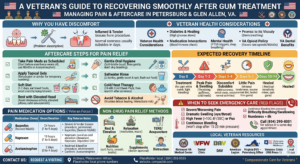
- Pain Medication: Do not wait for pain to be severe—start meds before anesthesia wears off. The ADA and VA suggest NSAIDs (e.g. ibuprofen 400–600 mg) alone or with acetaminophen (Tylenol) as first-line therapy. For example, take 400 mg ibuprofen with a snack (food/milk) every 6–8 hours, and alternate with 500–1000 mg acetaminophen every 6 hours as needed. Do not exceed daily limits (2400 mg ibuprofen; 3000 mg acetaminophen). This regular schedule keeps pain down and inflammation controlled.
- Veteran-specific note: If you take blood thinners or have ulcers, be cautious with NSAIDs (they thin blood and irritate stomach lining). Acetaminophen is gentler on the gut but watch liver dosing. If unsure, take the lower dose or consult your doctor. Always follow dosing instructions and consult your doctor if unsure.
- Topical Anesthetics: Apply an over-the-counter gel (benzocaine or similar) on sore gums. This numbs the area temporarily and complements oral meds. Use sparingly and do not swallow.
- Oral Hygiene: Keep your mouth clean to avoid infection. Brush gently twice daily with a soft-bristle toothbrush – use a smaller circular motion and avoid vigorous scrubbing over tender areas. Continue flossing once a day by sliding the floss gently between teeth. If gums bleed slightly with brushing or flossing, that’s normal; just be gentle. Including brushing twice daily and flossing once daily is crucial to remove plaque. (Our [Cavity Prevention] page has tips on gentle techniques.) Do not skip brushing for fear of pain – keeping bacteria down speeds recovery.
- Saltwater Rinse: Rinse your mouth 2–3 times per day with warm salt water (½ teaspoon salt in 8 oz warm water). Gently swish for 30 seconds then spit. This natural remedy soothes gum tissues, reduces swelling, and cleans debris. Use salt rinses especially after meals to flush out any food bits.
- Diet: Eat soft, bland foods for 1–2 days after treatment. Think yogurt, soup, applesauce, mashed potatoes, scrambled eggs, smoothies. Avoid crunchy (chips, nuts), spicy, citrus, or extremely hot foods/drinks that can sting sensitive gums. Also avoid sucking through straws initially (the suction can dislodge clots or irritate gums). Cold or room-temperature items (ice cream, popsicles) can feel soothing. As pain decreases (usually after a day), you can gradually reintroduce regular foods as tolerated.
- Cold/Heat Therapy: Apply a cold pack or bag of ice (wrapped in a cloth) to the outside of your cheek near the treated area for 10–20 minutes at a time during the first 24–48 hours. Cold constricts blood vessels and numbs pain. After 48 hours, if soreness persists, a warm moist heat (like a warm towel on the face) can help relax muscles and improve comfort.
- Rest: Avoid strenuous activity and heavy lifting for at least 24 hours after treatment. Rest with your head elevated on pillows to reduce throbbing and bleeding. A calm, quiet environment will help pain control and healing.
- Avoid Tobacco and Alcohol: Do not smoke or use tobacco products for several days after treatment; nicotine delays healing. Also avoid alcoholic beverages, which can interact with medications and impede tissue repair.
Following these steps has been shown to speed healing and reduce pain. If you were given any special instructions (like a medicated rinse or prescription mouthwash), follow those exactly.
Expected Pain and Healing Timeline
It helps to know what to expect each day:
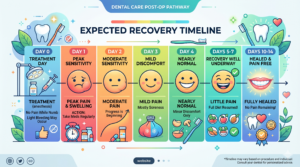
- Day 0 (Day of Treatment): Gums are numb for a few hours. Avoid eating until numbness wears off to prevent biting lips. Use gauze or tea bags with gentle pressure to stop any oozing (change every 10–15 minutes until bleeding slows). Take your first pain medication dose a few hours after leaving the office, even if you feel fine at the moment.
- Days 1–2 (48 hours): Pain and swelling will peak. You may feel a dull throbbing. Continue cold packs and regular pain meds. Slight puffiness or bruising on the face is normal (especially after surgery). Sleep propped up on pillows. At the end of Day 2, pain should start to decrease.
- Days 3–4: Discomfort should be noticeably less. Gums may feel sore but generally manageable with milder meds (or you may switch to just Tylenol now). You might notice slight gum sensitivity to pressure or temperature – this is normal. Swelling and bruising will also recede. By Day 4, most normal activities (brushing, eating soft foods) should be doable. If you had stitches, they may begin to dissolve.
- Days 5–7: Most patients have minimal pain. Gums may feel a bit tender but should no longer hurt at rest. The area will start looking pink and firm. Continue good hygiene. If you experience any sharp pain with biting, it may mean biting pressure on the healing gums – try to chew gently or on the opposite side. By the end of this week, you can probably switch back to your normal diet, but still be mindful with chewing.
- Days 8–14: Healing is nearly complete. Any residual sensitivity or tightness should be minor. At two weeks, gums are usually healed or very close. We often schedule follow-up visits around 1–2 weeks post-op to check healing. If you had a surgical graft, complete internal healing may continue for a few weeks, but daily life should be comfortable.
Most symptoms “subside within a few days to a couple of weeks.” Use this timeline as a guide: if pain is worse on Day 5 than Day 1, or still severe after Day 7, call us – that may signal a problem. Otherwise, gradual improvement is normal.
Pain Medication Options (Analgesic Table)
Dental pain can be managed with various medications. Here’s a quick comparison:
| Medication (Dose) | Onset / Duration | Key Notes for Veterans |
| Ibuprofen (Advil, 400–600 mg) | Onset ~30 min; lasts 6–8 hrs | Strong anti-inflammatory; take with food. Check with doctor if you have ulcers or are on blood thinners. Avoid if on warfarin or have kidney issues. First-line choice. |
| Naproxen (Aleve, 220–440 mg) | Onset ~1 hr; lasts 8–12 hrs | Longer-lasting NSAID; similar cautions as ibuprofen. Good for overnight pain control. |
| Acetaminophen (Tylenol, 500–1000 mg) | Onset ~30 min; lasts 4–6 hrs | Gentle on the stomach. Maximum ~3000 mg/day. Safe with blood thinners, but watch liver interactions (avoid alcohol). Useful if NSAIDs are contraindicated. |
| Aspirin (325–650 mg) | Onset ~30 min; lasts 4–6 hrs | Blood thinner (heart protection); not ideal post-procedure due to bleeding risk. Use only if recommended by doctor. |
| Orajel (Benzocaine Gel) | Onset <5 min; lasts ~15–20 min | Numbs local gum area. Temporary relief for surface pain. Avoid swallowing and prolonged use. |
| Hydrocodone/Oxycodone (Rx) | Onset ~30–60 min; lasts ~4–6 hrs | Strong opioids (often combined with acetaminophen). Only for severe pain not relieved by NSAIDs. VA cautions high addiction risk. Use exactly as prescribed and for the shortest time needed. |
| Cold Pack (15–20 min) | On contact; lasts until removed | Non-drug. Apply to cheek to reduce swelling and dull pain (especially first 24–48h). |
| Warm Salt Rinse | Immediate soothing effect; repeat as needed | Not a true analgesic, but eases discomfort and keeps area clean. |
Always follow dosage instructions on labels or from your dentist. Do not mix multiple NSAID products, and never exceed recommended limits.
When to Seek Emergency Care
Most post-treatment pain is manageable at home. However, urgent symptoms require prompt action:
- Severe or Worsening Pain: If pain suddenly intensifies after a few days or cannot be controlled by meds, call us immediately. This may signal infection or a trapped blood clot (if a tooth was extracted).
- Rapid/Severe Swelling: Some facial swelling is normal, but if swelling is dramatic (especially involving eye or throat), get help. It may indicate a spreading infection or allergic reaction.
- High Fever or Pus: Fever over 100.4°F (38°C) or yellow/green discharge from gums suggests infection. Contact your dentist or doctor right away.
- Continuous Bleeding: Slight oozing is fine, but bleeding that soaks through gauze pads or won’t stop after 15–20 minutes of firm pressure needs emergency attention.
- Difficulty Breathing/Swallowing: Very rare after gum treatment, but any trouble breathing or swallowing is an emergency (go to ER).
- Numbness > 6 Hours: If anesthesia lingers beyond 6–8 hours, or new numbness arises, call us to evaluate possible nerve injury.
In short, “severe pain, trauma, or swelling” after dental work means seek emergency care. Our [Emergency Dentistry] page discusses same-day appointments and what to do if problems arise. Don’t wait until morning if you have a serious symptom; you can call (804) 290-8001 for an emergency consult.
Non-Drug Pain Relief Methods
Besides medications, these techniques can help:
- Cold/Heat: We discussed cold packs early on. After 48 hours, a warm (not hot) compress or warm shower can relax muscles.
- Rest & Elevation: Sleep with pillows under your head. Good sleep aids healing.
- Relaxation: Use deep-breathing exercises, guided meditation, or quiet music to reduce anxiety. The VA incorporates such mind-body approaches in pain programs.
- Acupuncture/TENS: Some patients find relief through acupuncture or electrical nerve stimulation (TENS), though evidence is limited for dental pain.
- Nutrition: Stay hydrated and eat nutrient-rich foods (soft fruits, smoothies, broths) to fuel recovery.
- Supplements: Turmeric, ginger, or pineapple (bromelain) have mild anti-inflammatory effects. Only try these if your doctor approves.
- Distraction: Gentle activity like walking, or engaging in a hobby, can take your mind off discomfort.
These strategies complement medication. Veterans should feel empowered to use all safe options to manage pain and aid healing.
Local Resources for Veterans (Petersburg & Glen Allen)
Support is available in our area:
- Richmond VA Medical Center (Hunter Holmes McGuire VA) – Dental Clinic (if eligible): Offers cleanings, X-rays, fillings, root canals, periodontal surgeries, dentures, etc.. Address: 1201 Broad Rock Blvd, Richmond, VA 23249. Ph: (804) 675-5000. Petersburg veterans usually go to Richmond VA for specialty care.
- Veterans Service Organizations: DAV, VFW (e.g., Petersburg VFW Post 111, 3082; Chesterfield County DAV), and American Legion (Petersburg Post 10) can help with benefits and transportation to appointments.
- Virginia DVS – Petersburg Office: Advises on VA healthcare eligibility and benefits. (Check dvs.virginia.gov for contact info.)
- Veterans Crisis Line: Dial 988 and press 1 for 24/7 mental health support.
- Local Clinics: If not VA-eligible, consider community clinics (e.g. Richmond/Henrico Health District dental clinics) or dental schools.
Call to Action
If your pain is difficult to control, or you have any concerns, please call us right away. Our Glen Allen office is ready to help veterans from Petersburg and nearby areas. Call (804) 290-8001 for advice or a same-day appointment. You can also request a visit via our [Contact Us] page. Our address is 5231 Hickory Park Dr, Suite E, Glen Allen, VA 23059. We will ensure you receive compassionate care and effective pain management after your gum treatment.
Remember: Follow your aftercare plan closely and don’t hesitate to reach out. Proper care now means healthier gums and a brighter smile tomorrow.
Frequently Asked Questions
Sources: Authoritative dental and veteran health guidelines were used, including VA and ADA resources. These ensure accurate, up-to-date information to keep our veteran patients safe and comfortable after gum treatment.