
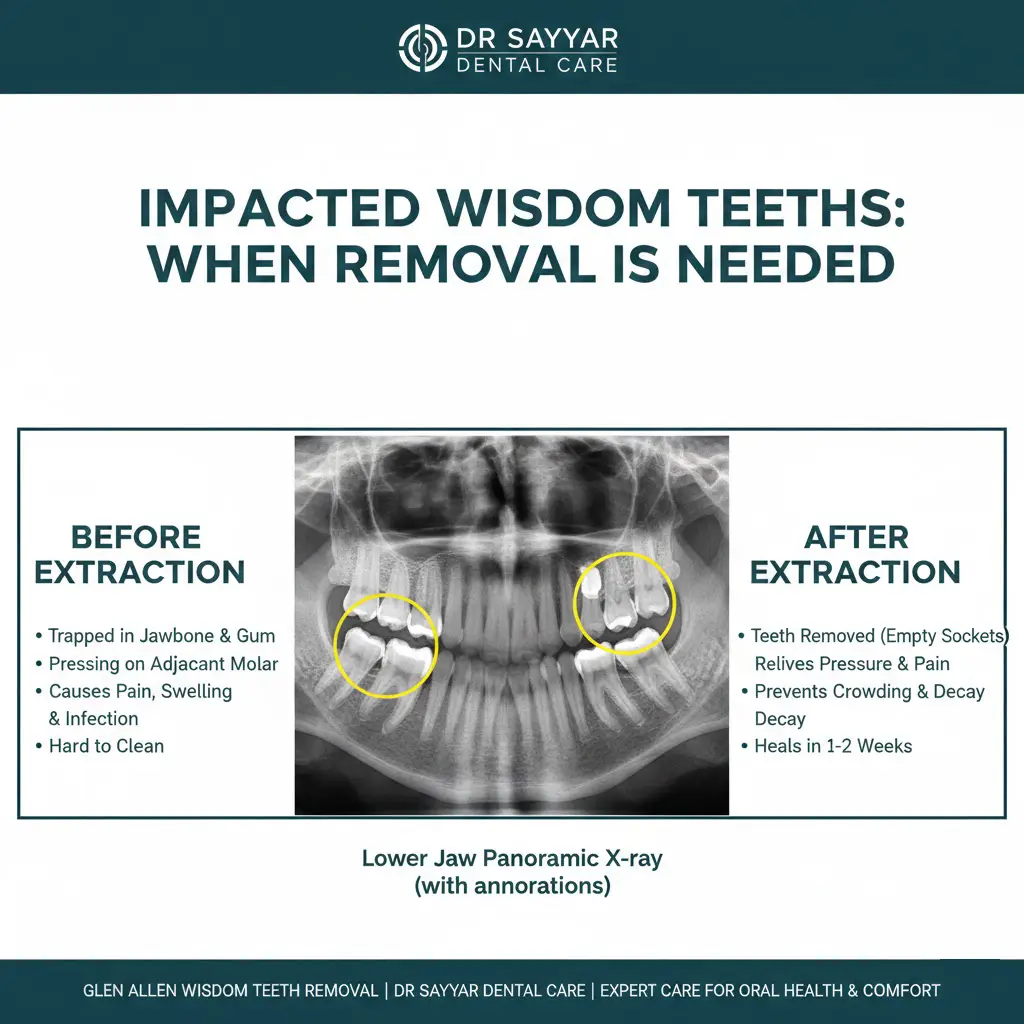
Wisdom teeth (third molars) often erupt between ages 17–25 and can cause significant pain or damage if they become impacted (stuck under the gum or jawbone). Glen Allen patients may notice persistent jaw pain, swelling behind the molars, or difficulty opening the mouth—classic impacted wisdom tooth symptoms. Impacted teeth can also lead to inflamed or bleeding gums, bad breath, and even infections that threaten nearby teeth. For residents suffering these symptoms, Dr. Sayyar’s Glen Allen dental team provides compassionate, expert care. As a solution, our practice offers comprehensive wisdom teeth removal procedures under modern anesthesia, ensuring patients regain comfort and oral health.
Early removal can prevent complications down the road. Impacted wisdom teeth are extremely common—about 90% of people have at least one impacted molar. If left unchecked, impacted teeth may cause tooth decay, gum disease or damage neighboring teeth. Dr. Sayyar carefully evaluates each patient to determine if and when to remove wisdom teeth. In Glen Allen, dentists often recommend removing troublesome wisdom teeth as a preventive measure in the late teens or early twenties, when recovery is quicker and risks are lower. Even if your wisdom teeth aren’t currently painful, a consultation can identify hidden issues and help you avoid emergency situations. For sudden wisdom-tooth pain, Dr. Sayyar’s team also provides emergency pain relief to stabilize you and plan timely treatment.
Why & How: Understanding Impacted Wisdom Tooth Extraction
When a wisdom tooth is impacted, it may be fully trapped in bone or partially trapped in gum tissue. Our team uses dental X-rays and exams to diagnose the type and severity of impaction. For example, a horizontal impaction lies sideways under the gums, often causing intense pressure and pain. In the X-ray below, you can see wisdom teeth angled and locked beneath the gum line on both sides (yellow circles). Impacted teeth like these typically require surgical removal.
During a wisdom tooth extraction, we use advanced techniques to ensure comfort and safety. As Mayo Clinic notes, the procedure is typically outpatient: after numbing (with local anesthesia) or sedating the patient, the surgeon makes a small gum incision and gently removes bone blocking the tooth. Dr. Sayyar’s team offers oral sedation and nitrous oxide, so you can stay relaxed or even snooze through the procedure. Importantly, Cleveland Clinic confirms that an impacted wisdom tooth extraction “isn’t necessarily more painful” than a routine removal. We provide effective anesthesia and post-operative pain medication, so most patients report only mild discomfort during recovery.
Treatment Comparison Table
Below is a comparison of common approaches to impacted wisdom teeth. This table outlines options, costs, and pros/cons for Glen Allen patients:
| Option | Description | Pros | Cons | Approx. Cost (per tooth) |
| Watchful Monitoring | No extraction if symptom-free; regular check-ups and X-rays to watch for issues. | Avoids surgery; no immediate cost. | Risk of future infection or decay; ongoing monitoring needed. | \$0 (routine check-ups) |
| Simple Extraction (Dentist) | Removal in-office under local anesthesia for fully erupted or minimally impacted teeth. | Quick outpatient procedure; lower cost than surgery. | May be difficult if tooth is deeply impacted or near nerves. | \$200–\$400 |
| Surgical Extraction (Oral Surgery) | Performed by an oral surgeon or specialist under IV sedation/general anesthesia for deeply impacted teeth. | Can remove complex impactions safely; high success rate; comfortable sedation. | Higher cost; longer recovery; requires advanced facility. | \$400–\$800 (plus sedation) |
Table: Treatment options for impacted wisdom teeth, highlighting when each is used, along with benefits, drawbacks, and typical costs. Actual prices vary by complexity and insurance.
Step-by-Step Guide: Is Extraction Right for You?
Deciding on wisdom tooth removal involves careful evaluation. Here’s a step-by-step guide to help Glen Allen patients:
- Schedule an evaluation appointment. Call Dr. Sayyar’s Glen Allen office to book a consultation. We will review your symptoms (pain, swelling, etc.) and medical history.
- Get diagnostic X-rays and exam. During your visit, we take panoramic X-rays to assess tooth position and impaction depth. The dentist will examine your mouth and discuss any current problems (e.g. cysts, gum disease) that an impacted tooth may be causing.
- Discuss treatment options. If an impacted wisdom tooth is present, Dr. Sayyar will explain whether we recommend removal now or a monitoring plan. Many dental specialists advise removing impacted wisdom teeth that cause pain or are likely to cause problems later. We’ll explain the benefits of extraction versus watchful waiting based on your specific case.
- Plan the procedure. If extraction is needed, we’ll schedule a date and go over anesthesia choices (local anesthesia, nitrous oxide, or IV sedation). Our team will give you pre-visit instructions (e.g. fasting if sedation is planned) and answer any questions.
- Undergo extraction. On the procedure day, Dr. Sayyar or our oral surgery specialist gently removes the tooth. Depending on the case, stitches may be placed and gauze applied to control bleeding. Modern techniques minimize trauma.
- Home care and follow-up. We’ll review aftercare steps and give you materials (pain medication prescription, gauze, antiseptic rinse, etc.). A follow-up appointment may be scheduled to monitor healing.
Candidacy: Ideal candidates for wisdom tooth extraction include patients with pain, repeated infections (pericoronitis), cysts, gum disease around a wisdom tooth, damage to adjacent teeth, or difficulty cleaning the area. Young adults often heal faster, so many dentists recommend extraction in the late teens or early twenties as a preventive measure. However, every case is unique. If your impacted wisdom tooth is currently symptom-free, Dr. Sayyar may propose regular monitoring instead of immediate removal. Ultimately, the decision is based on your comfort, oral health, and X-ray findings.
Safety & Aftercare (Checklist)
Extraction of wisdom teeth is a common procedure and generally safe when performed by experienced dentists. Our practice follows strict sterilization and uses advanced imaging to avoid complications. Anesthesia is administered by trained professionals, and you will be closely monitored during recovery. If any emergency concerns arise (severe pain, bleeding, or infection), Dr. Sayyar’s emergency dentistry services can provide prompt relief and care.
Once home, proper aftercare ensures smooth healing. Use the checklist below to guide your recovery:
- Control Bleeding: Bite gently on gauze as directed, replacing it every 30–45 minutes until bleeding stops. Keep your head elevated (use pillows) for the first 24 hours.
- Manage Pain & Swelling: Take prescribed or OTC pain relievers (ibuprofen or acetaminophen) as recommended. Apply an ice pack to your cheek in 15–20 minute intervals during the first 24–48 hours to reduce swelling.
- Rest: Avoid strenuous activity and bending over for 24–48 hours. Rest with your head raised; minimizing movement helps blood clot form and reduces bleeding.
- Diet: Stick to soft, cool foods (yogurt, smoothies, soup, mashed potatoes) for the first few days. Gradually reintroduce solids as you heal. Do not use straws, smoke, or spit forcefully for at least 72 hours, as these actions can dislodge the blood clot and cause a painful dry socket.
- Oral Hygiene: Do not rinse your mouth or brush the extraction site for 24 hours. After that, rinse gently with warm salt water (½ teaspoon salt in 8 oz water) several times a day, especially after meals. Continue to brush and floss other teeth normally, but be very gentle near the surgery site.
- Watch for Complications: It is normal to have mild pain, swelling, or light bleeding initially. However, contact Dr. Sayyar immediately if you notice: excessive bleeding beyond 12 hours, severe pain not eased by medication, fever or chills, a foul smell or taste (sign of infection), or numbness persisting beyond 24 hours. Early intervention can prevent serious issues like infection or dry socket.
Following these steps and our detailed instructions will help you heal quickly and comfortably. Remember, avoid smoking altogether until fully healed, as it significantly delays recovery and raises the risk of complications.
The Dr. Sayyar Advantage
Choosing Dr. Sayyar’s Glen Allen clinic means trusting a team with years of experience and a focus on patient comfort. Dr. Sayyar (DDS, MAGD) is a Master of the Academy of General Dentistry, reflecting advanced training and dedication to high-quality care. Our practice invests in state-of-the-art technology — from digital 3D imaging to guided surgical techniques — to plan extractions precisely and gently. We also prioritize patient anxiety relief: nitrous oxide (laughing gas) and oral sedation are available for nervous patients. As one review notes, “The staff is so kind and knowledgeable… They know the dentist can be nerve wracking and they do their part to make sure patients feel comfortable”. Another patient praised how the team reassured her, saying Dr. Sayyar and his staff were “first class” in calming her nerves during emergency care.
Our friendly, experienced staff will walk you through every step — from evaluation to post-op follow-up. Unlike some offices, Dr. Sayyar takes a conservative approach: he will never push unnecessary extractions or treatments. Your best interest and comfort are our top priorities. Conveniently located in Glen Allen, our office also offers modern amenities (sedation options, private treatment rooms, and attentive post-op support). With Dr. Sayyar, you’re not just another patient; you’re part of a community that values honest, expert dental care.
Conclusion & FAQs
Impacted wisdom teeth can be a source of pain, infection, and anxiety. However, with Dr. Sayyar’s expert care in Glen Allen, you have a trusted team ready to guide you through diagnosis, treatment, and healing. We emphasize comfort and safety, using advanced oral surgery techniques to remove troublesome molars before they cause bigger issues. By recognizing symptoms early and scheduling an evaluation, you can prevent complications and enjoy a healthy, pain-free smile.
Finally, here are answers to three common questions patients ask about wisdom tooth extraction:
Q: How do I know when my wisdom teeth need to be removed?
A: The need for removal depends on your symptoms and dental exam findings. If an impacted wisdom tooth is causing pain, infection, cysts, or crowding, removal is usually advised. Many Glen Allen dentists recommend extraction if you’re having jaw pain or swelling around a wisdom tooth. Even if you feel fine now, X-rays may show that there isn’t enough room for the tooth, which increases future risks. Dr. Sayyar will discuss your specific case and advise extraction “when you start developing symptoms” or when it’s likely to cause problems later.
Q: Is getting my impacted wisdom teeth removed painful?
A: Our goal is to make you as comfortable as possible. The extraction itself is done under anesthesia, so you won’t feel pain during the procedure. It’s common to feel pressure or movement, but no sharp pain thanks to numbing and sedation. According to Cleveland Clinic, even deeply impacted teeth “aren’t necessarily more painful to remove” when done by skilled professionals. After surgery, some soreness and swelling are normal for a few days, but we’ll provide pain medication and cold compress instructions to manage it effectively. By following aftercare guidelines, most patients report that discomfort subsides quickly.
Q: How long is recovery after wisdom tooth extraction?
A: Recovery varies by case, but most patients feel much better in a few days and fully recover in 1–2 weeks. Initially, expect some swelling and mild pain. By about 3–4 days post-op, swelling usually starts to go down and you can begin eating more solid foods. Within two weeks, the gum tissue has mostly healed. As Cleveland Clinic notes, you can often return to school or work within a couple of days, but it may take one to two weeks for complete healing. We’ll schedule a follow-up or post-op check to ensure you’re on track and address any concerns.
If you have further questions or are experiencing any symptoms of impacted wisdom teeth, don’t hesitate to contact Dr. Sayyar Family Dentistry. Early evaluation can save you future discomfort. We’re here to help Glen Allen families maintain healthy, pain-free smiles — starting with your wisdom teeth.